Estate Agents (Estate Agency Work) Regulations 2010

Source: Singapore Statutes Online | Archived by Legal Wires

No. S 644
Estate Agents Act 2010
(Act 25 of 2010)
Estate Agents (Estate Agency Work) Regulations 2010
In exercise of the powers conferred by sections 42, 44 and 72 of the Estate Agents Act 2010, the Council for Estate Agencies, with the approval of the Minister for National Development, hereby makes the following Regulations:
PART I
PRELIMINARY
Citation and commencement
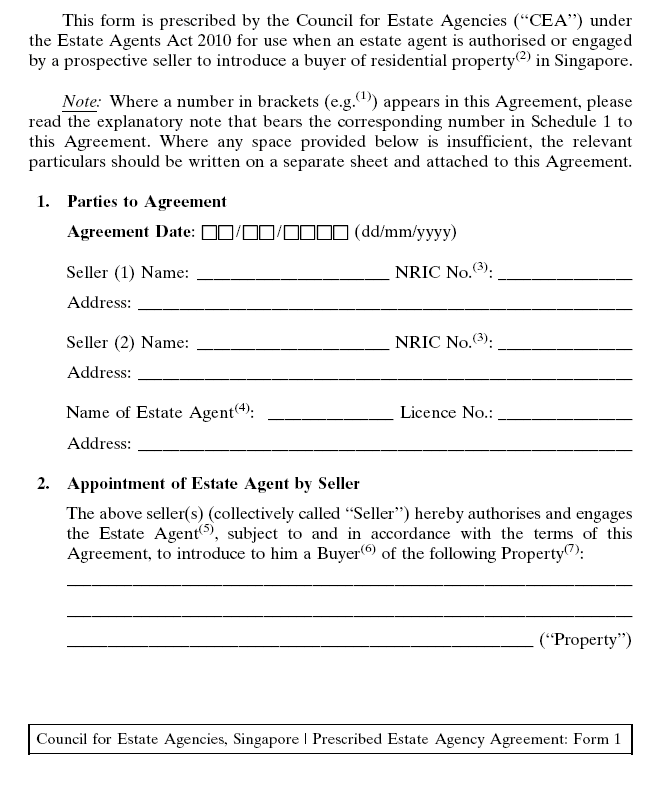
1.—(1)  These Regulations may be cited as the Estate Agents (Estate Agency Work) Regulations 2010 and shall, with the exception of regulation 9 and Parts IV, V and VI, come into operation on 15th November 2010.
(2)  Parts IV, V and VI shall come into operation on 1st January 2011.
(3)  Regulation 9 shall come into operation on 1st March 2011.
Definitions
2.  In these Regulations, unless the context otherwise requires —
“accredited CPE activity” means a CPE activity that is approved under regulation 16(3) as an accredited CPE activity and for which approval has not been suspended or revoked under regulation 16(7);
[S 878/2023 wef 22/12/2023]
“commercial or industrial property” means property other than residential property;
[Deleted by S 878/2023 wef 22/12/2023]
“CPE activity” means an activity, course or programme that is determined by the Council as a CPE activity under regulation 15(2)(a);
[S 878/2023 wef 22/12/2023]
[Deleted by S 644/2025 wef 01/01/2026]
“CPE training hour” means a continuing professional education training hour, determined by the Council under regulation 15(2)(d), accumulated by a CPE-liable individual after successfully completing a CPE activity;
[S 644/2025 wef 01/01/2026]
“CPE‑liable individual” means an individual who is a licensed estate agent, a registered salesperson, or a partner, director or key executive officer of a licensed estate agent;
[S 878/2023 wef 22/12/2023]
“developer” means any person who constructs or causes to be constructed property for sale or lease to other persons;
“HDB property” means any property which was sold or leased by the Housing and Development Board under the Housing and Development Act (Cap. 129);
“lease” includes an agreement for a lease;
“residential property” has the same meaning assigned to it in the Residential Property Act (Cap. 274);
[S 878/2023 wef 22/12/2023]
“specified class of CPE activities” means a class of CPE activities specified by the Council under regulation 15(2)(b);
[S 878/2023 wef 22/12/2023]
[Deleted by S 644/2025 wef 01/01/2026]
“specified number of CPE training hours” means the number of CPE training hours, specified under regulation 15(2)(c), that must be accumulated by a CPE-liable individual in respect of a specified class of CPE activities.
[S 644/2025 wef 01/01/2026]
PART II
CODES GOVERNING PROFESSIONAL PRACTICE,
ETHICS AND CONDUCT
Code of Ethics and Professional Client Care
3.  Every licensed estate agent and every registered salesperson shall observe and comply with the Code of Ethics and Professional Client Care set out in the First Schedule.
Code of Practice for Estate Agents
4.  Every licensed estate agent shall observe and comply with the Code of Practice for Estate Agents set out in the Second Schedule.
PART III
REGULATION OF ESTATE AGENCY WORK
No dual representation
5.—(1)  No salesperson or estate agent who is a natural person shall, in respect of the same property, have as clients both vendor and purchaser or both landlord and tenant.
(2)  Paragraph (1) applies regardless of the consent or agreement of the client or of any or all the parties to the relevant transaction.
(3)  Any person who contravenes paragraph (1) shall be guilty of an offence and shall be liable on conviction to a fine not exceeding $25,000 or to imprisonment for a term not exceeding 12 months or to both.
No referrals to moneylenders
6.—(1)  No estate agent or salesperson shall —
(a)introduce, refer or recommend a client to any moneylender or otherwise suggest the use of the services of any moneylender; or
(b)receive any commission, reward, fee, payment or other benefit whatsoever from any moneylender in respect of any moneylending transaction.
(2)  Any person who contravenes paragraph (1) shall be guilty of an offence and shall be liable on conviction to a fine not exceeding $25,000 or to imprisonment for a term not exceeding 12 months or to both.
No holding of transaction monies
7.—(1)  No estate agent or salesperson shall hold or handle any money for or on behalf of any party in relation to any of the following property transactions:
(a)the sale or purchase of any property situated in Singapore; and
(b)the lease of HDB property.
(2)  Paragraph (1) shall not prevent any estate agent or salesperson from —
(a)delivering on behalf of any party a crossed account payee cheque or cashier’s order drawn in favour of another party to the transaction; or
(b)receiving such remuneration or reimbursement in relation to the management, repair or renovation of the property as the estate agent or salesperson may be entitled to under a written contract or authorisation.
(3)  Any person who contravenes paragraph (1) shall be guilty of an offence and shall be liable on conviction to a fine not exceeding $10,000 or to imprisonment for a term not exceeding 6 months or to both and, in the case of a continuing offence, to a further fine not exceeding $500 for every day or part thereof during which the offence continues after conviction.
Use of Council symbols and representations
8.—(1)  No estate agent, salesperson or any other person shall, except with the express written permission of the Council —
(a)use any name, symbol, mark or representation that is identical to or which incorporates or resembles that of the Council; or
(b)use Internet domain names, World Wide Web addresses or email addresses that incorporate characters, initials or representations of the Council which may deceive or cause confusion.
(2)  Any person who contravenes paragraph (1) shall be guilty of an offence and shall be liable on conviction to a fine not exceeding $10,000 or to imprisonment for a term not exceeding 6 months or to both and, in the case of a continuing offence, to a further fine not exceeding $500 for every day or part thereof during which the offence continues after conviction.
Display of estate agent card
9.—(1)  Salespersons and estate agents who are natural persons must display upon themselves the estate agent card issued by the estate agent that they represent at all times when carrying out estate agency work.
(2)  The person displaying the estate agent card under paragraph (1) shall show the card to any person who may reasonably request to see the card and allow such person to record any information from the card.
(3)  Any person who contravenes paragraph (1) or (2) shall be guilty of an offence and shall be liable on conviction to a fine not exceeding $10,000 or to imprisonment for a term not exceeding 6 months or to both.
PART IV
PRESCRIBED ESTATE AGENCY AGREEMENTS
Prescribed estate agency agreements
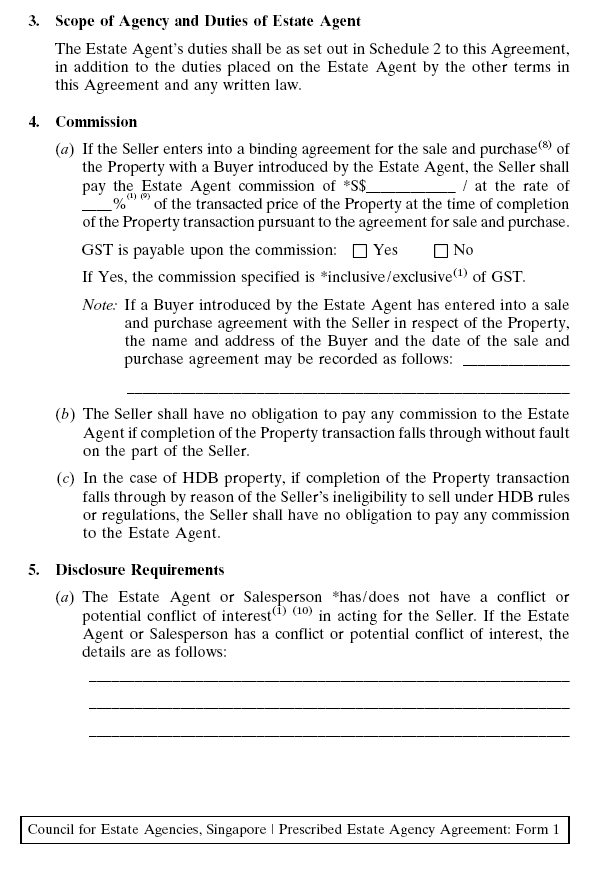
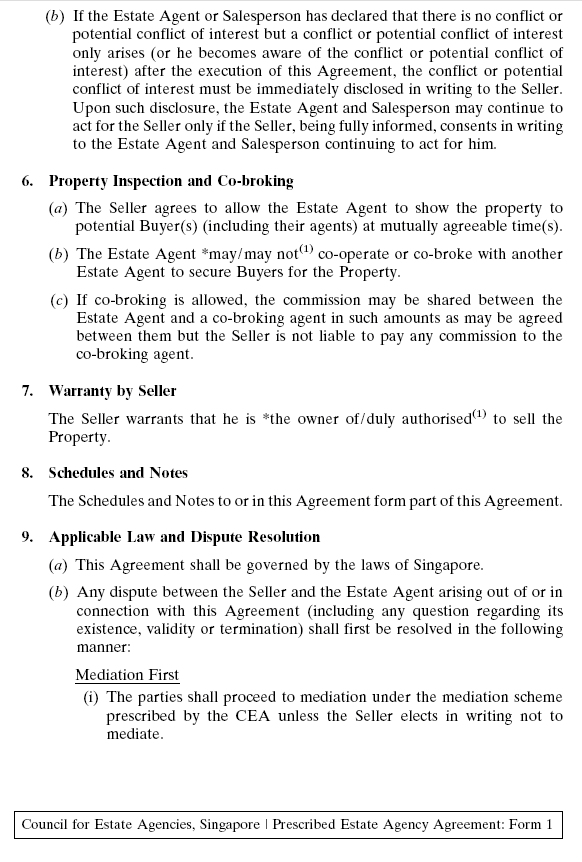
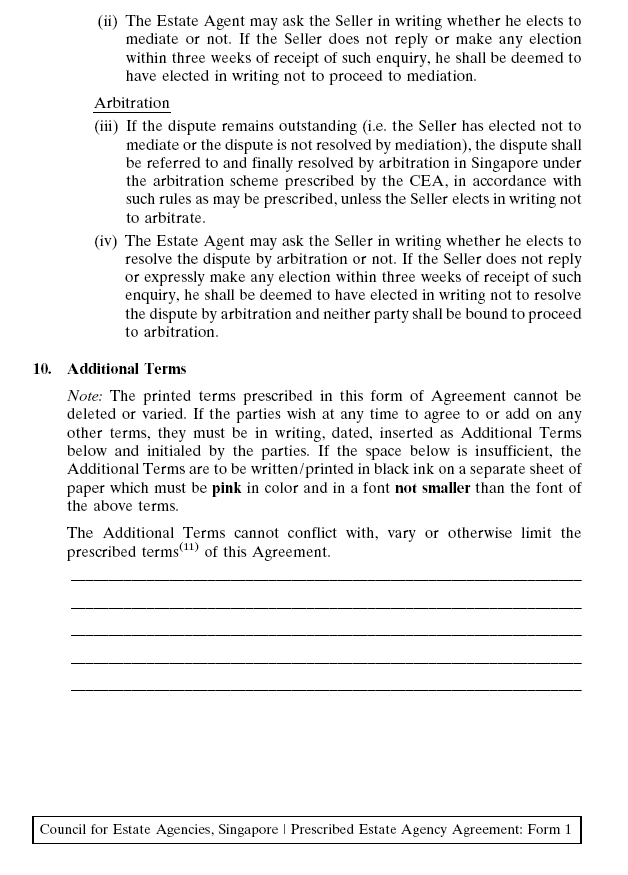
10.—(1)  The following agreements are prescribed for the purposes of section 44 of the Act in respect of estate agency work for the sale, purchase or lease of residential property in Singapore on a non-exclusive basis:
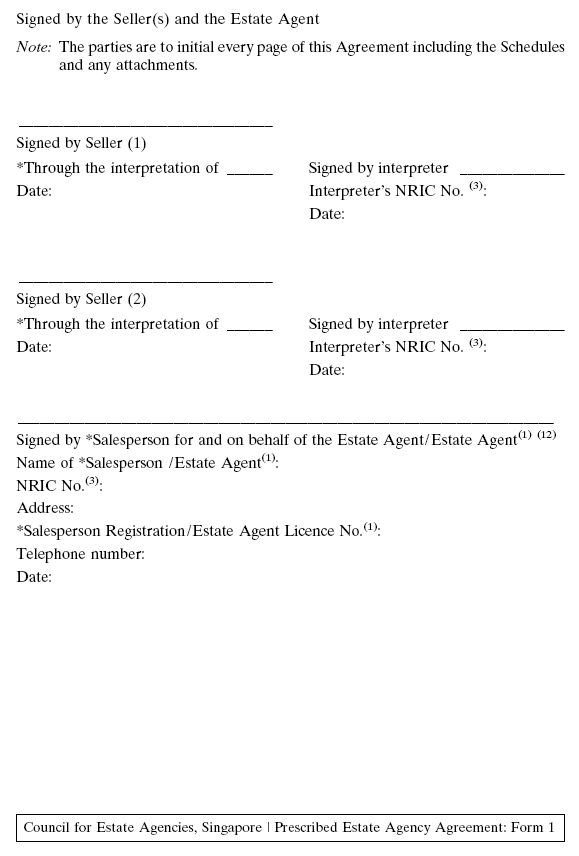
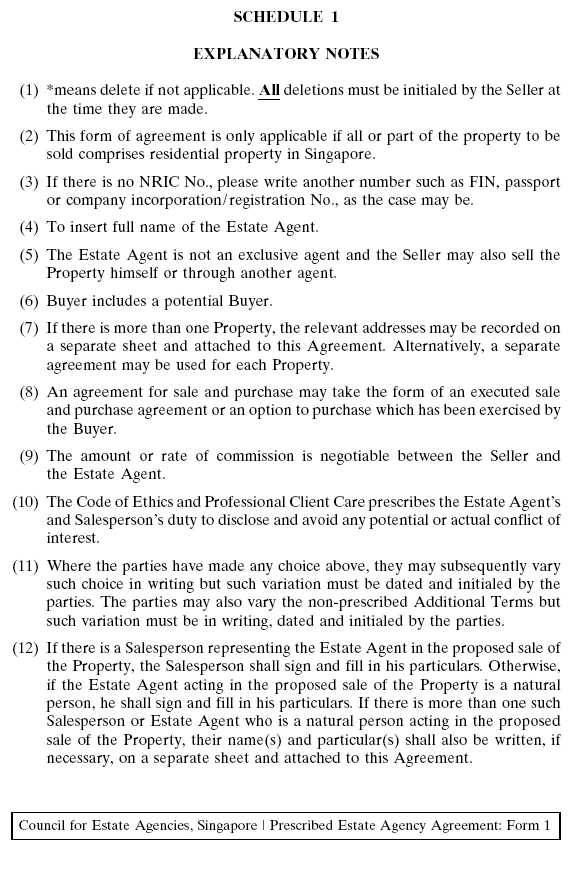
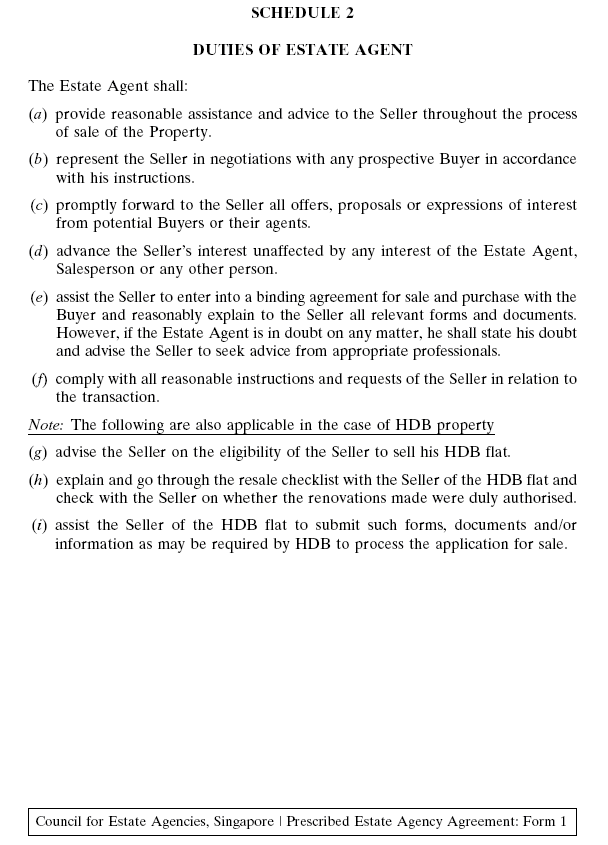
(a)Estate agency agreement for the sale of residential property (Form 1);
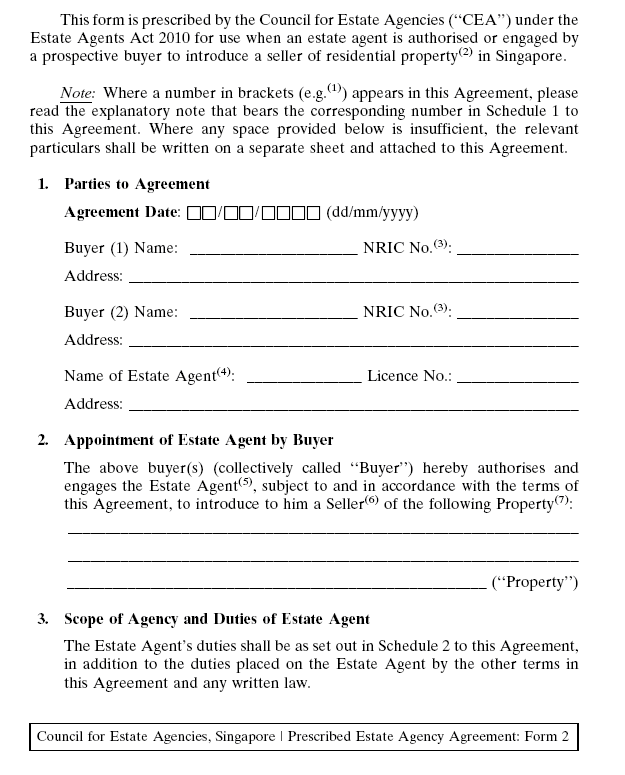
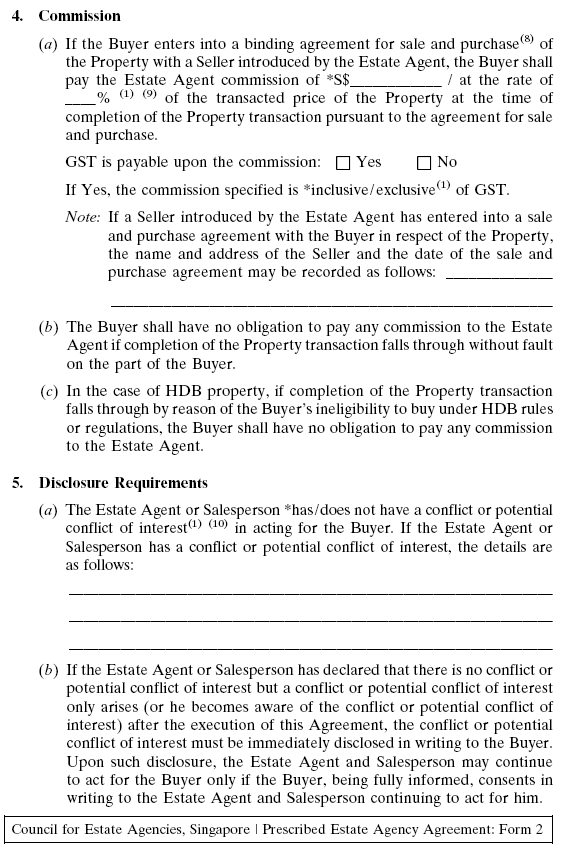
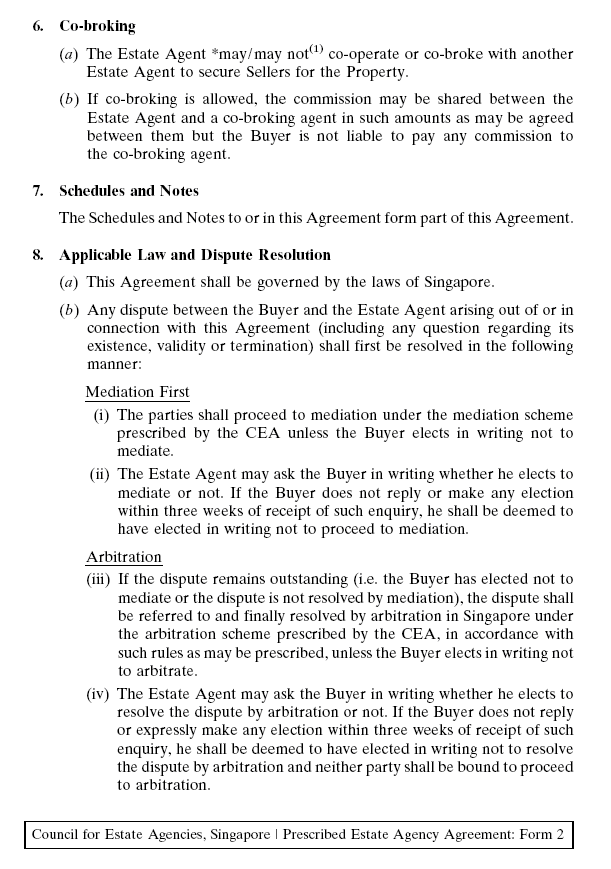
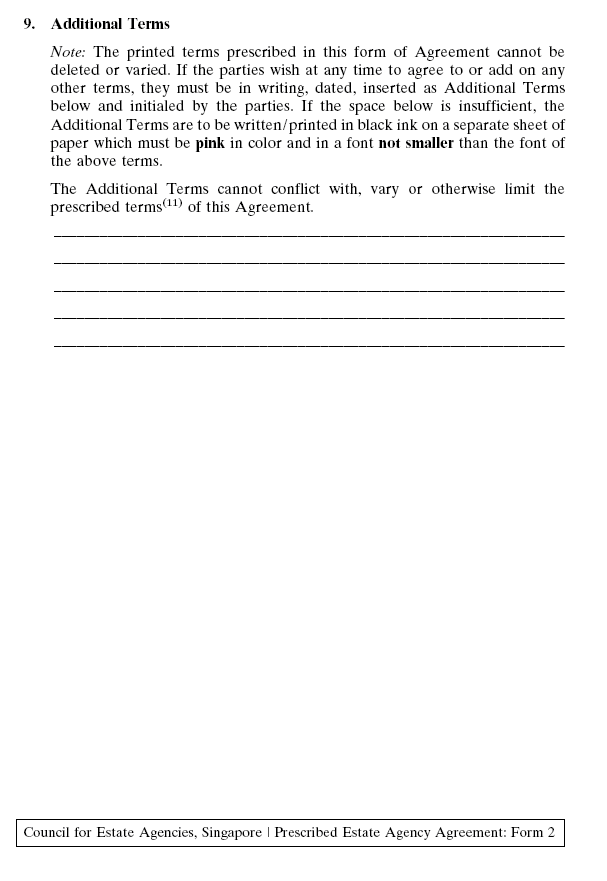
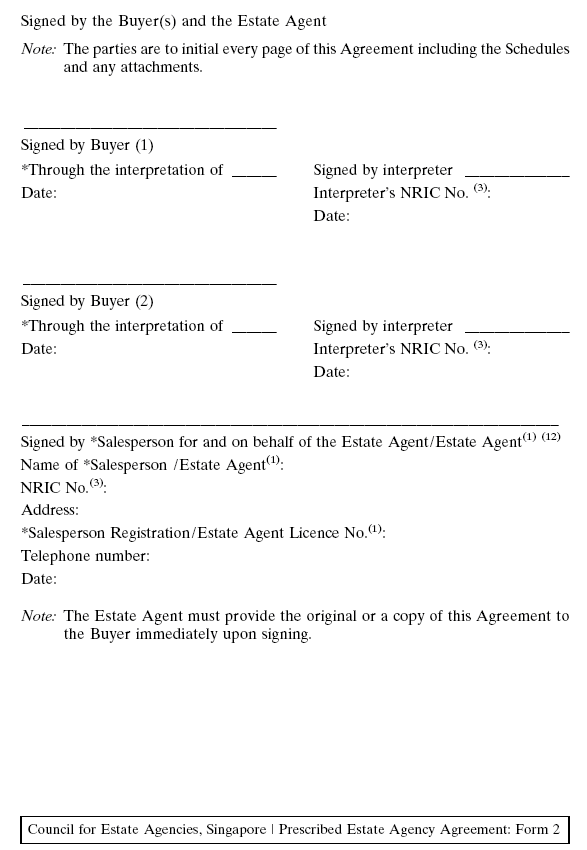
(b)Estate agency agreement for the purchase of residential property (Form 2);
(c)Estate agency agreement for the lease of residential property by a landlord (Form 3); and
(d)Estate agency agreement for the lease of residential property by a tenant (Form 4).
(2)  The following agreements are prescribed for the purposes of section 44 of the Act in respect of estate agency work for the sale, purchase or lease of residential property in Singapore on an exclusive basis:
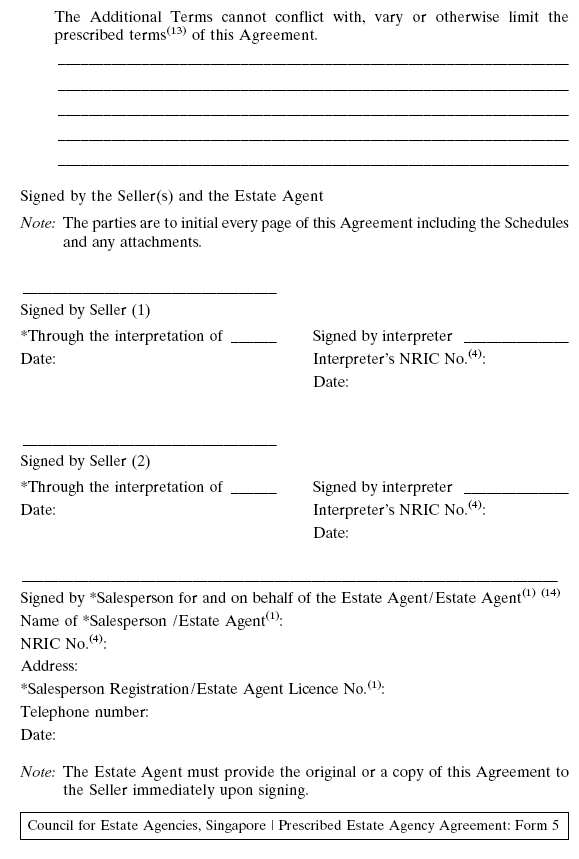
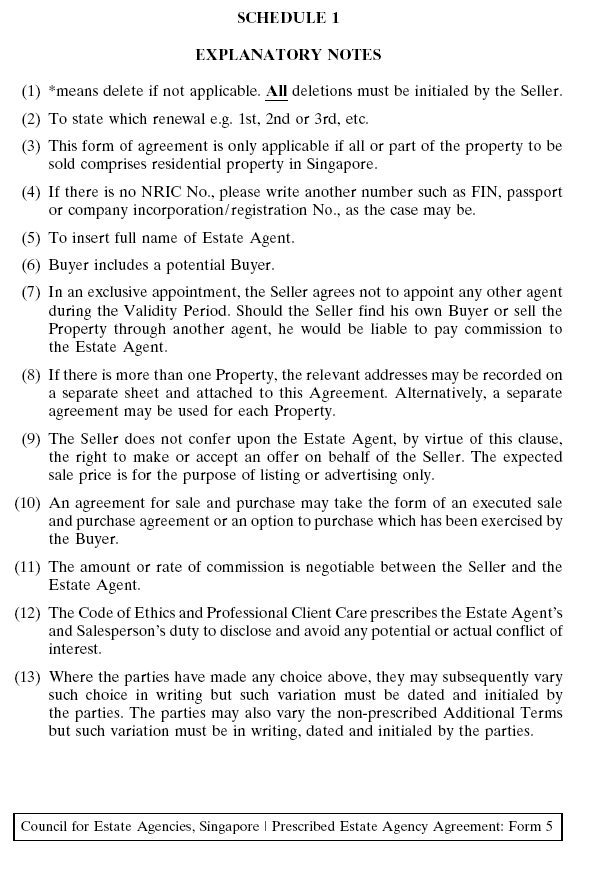
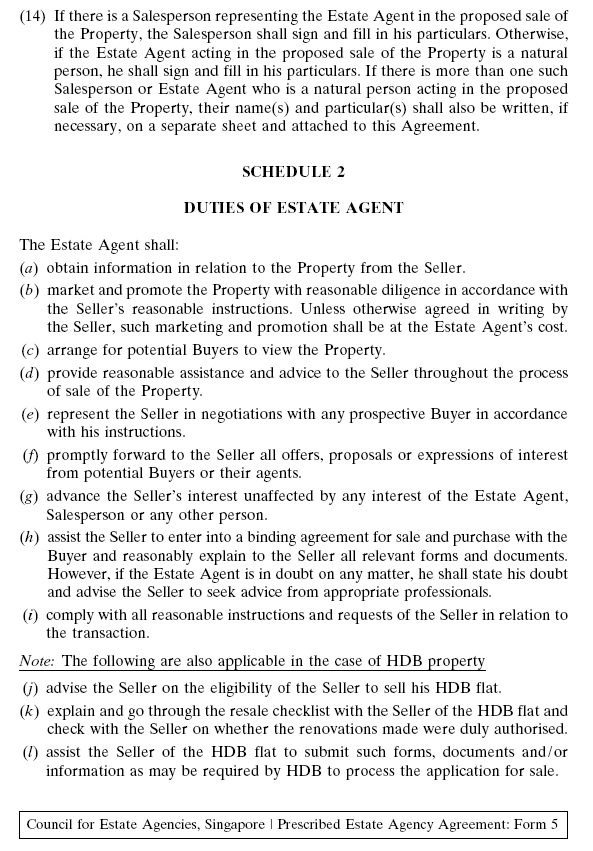
(a)Exclusive estate agency agreement for the sale of residential property (Form 5);
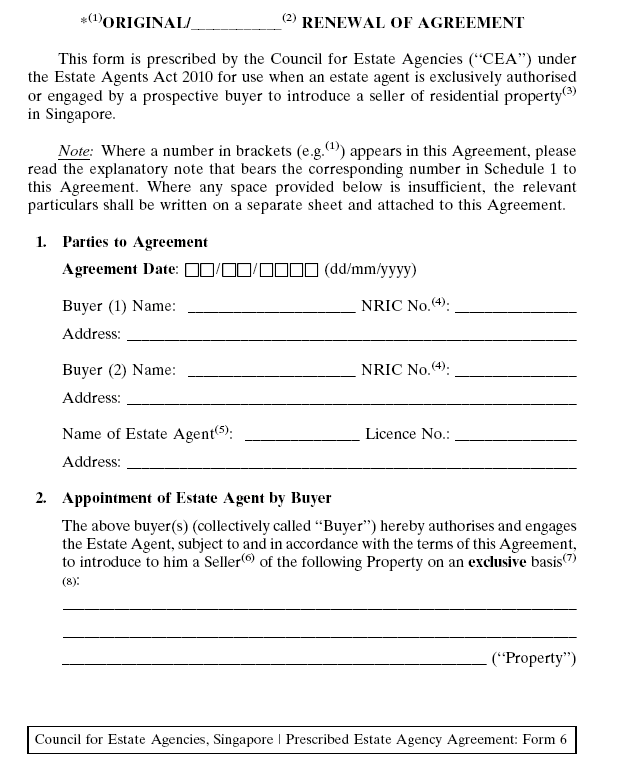
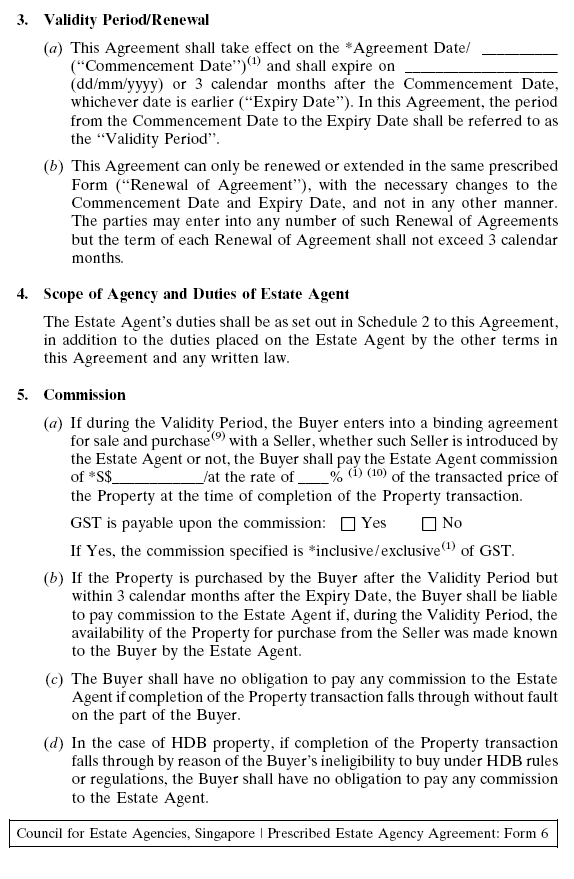
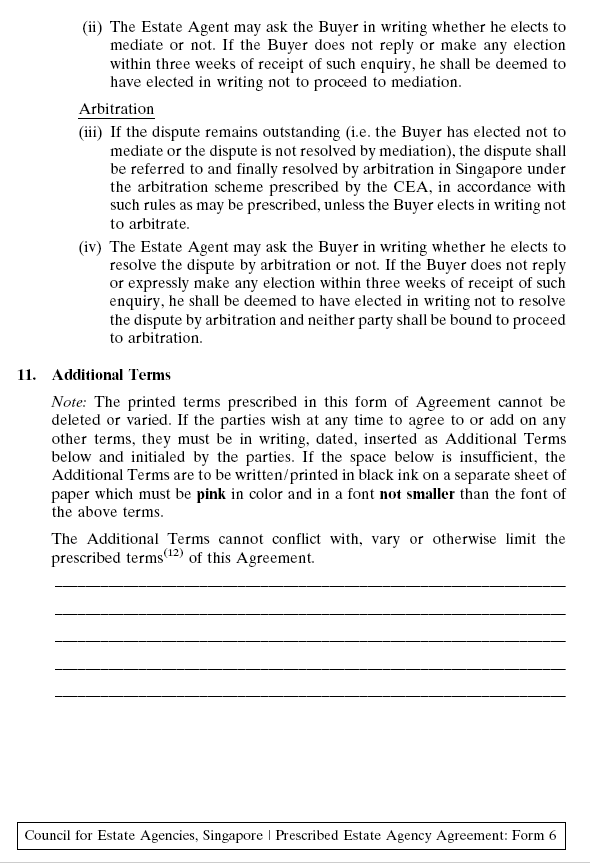
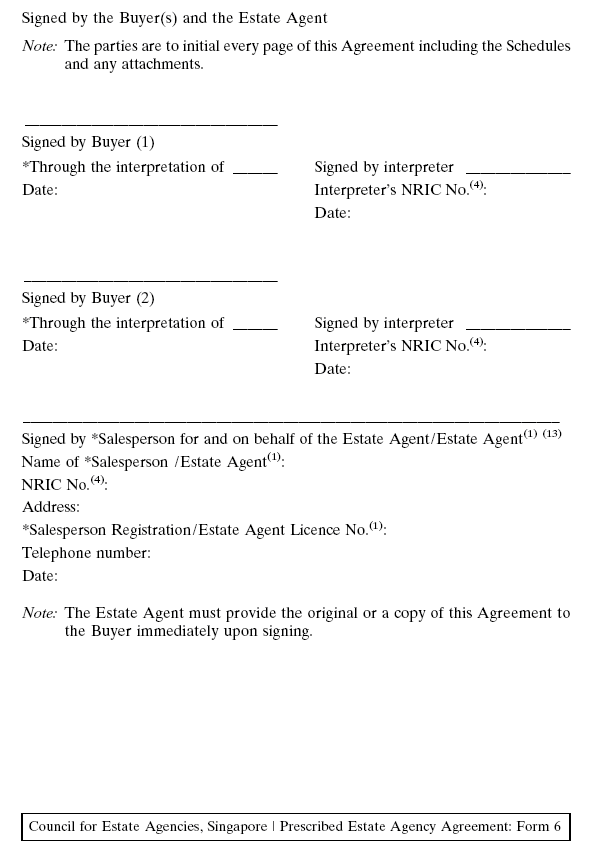
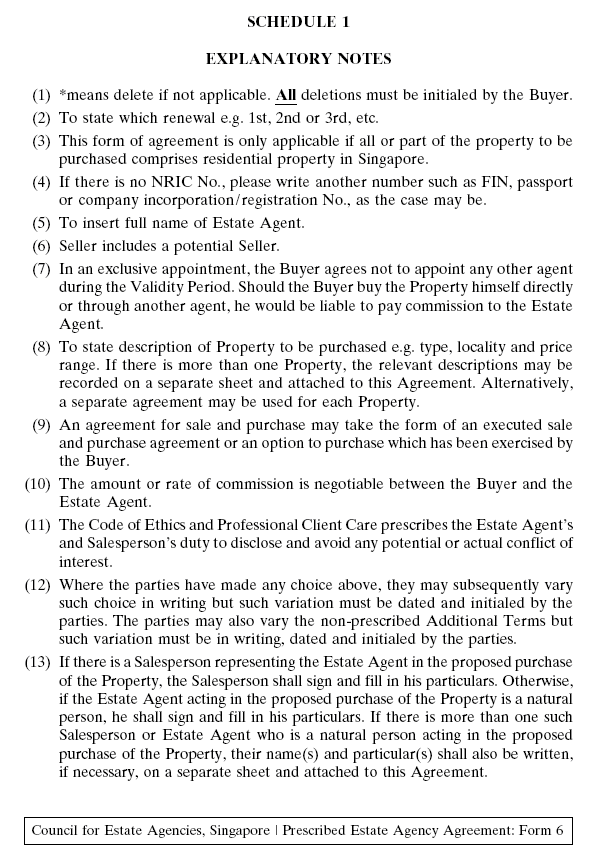
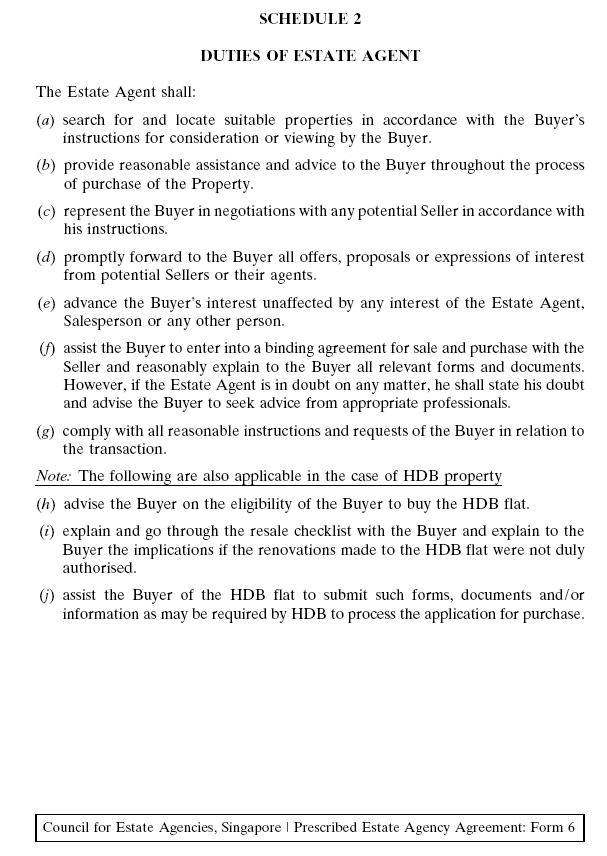
(b)Exclusive estate agency agreement for the purchase of residential property (Form 6);
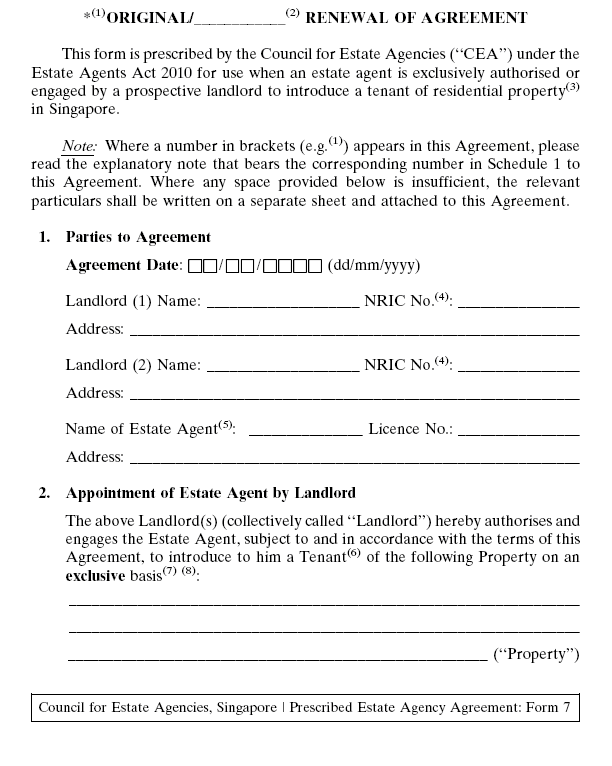
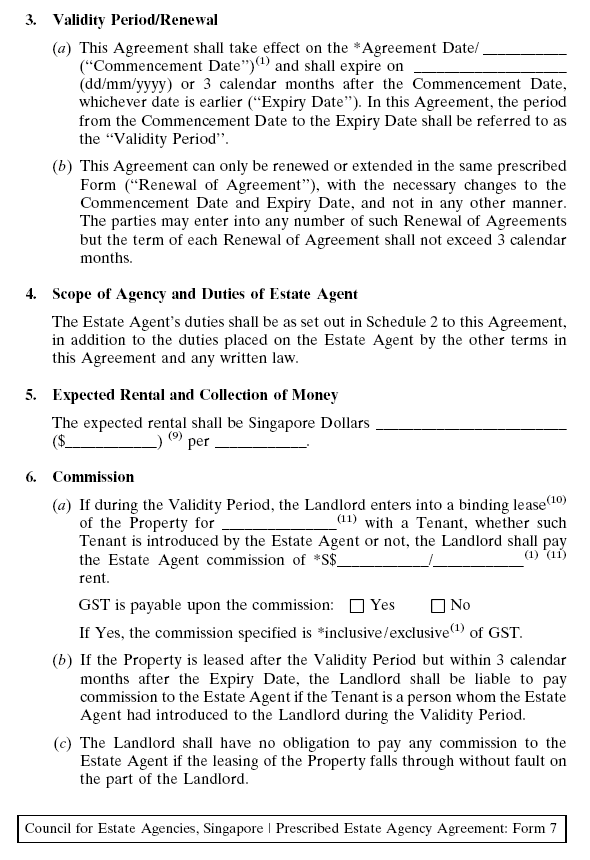
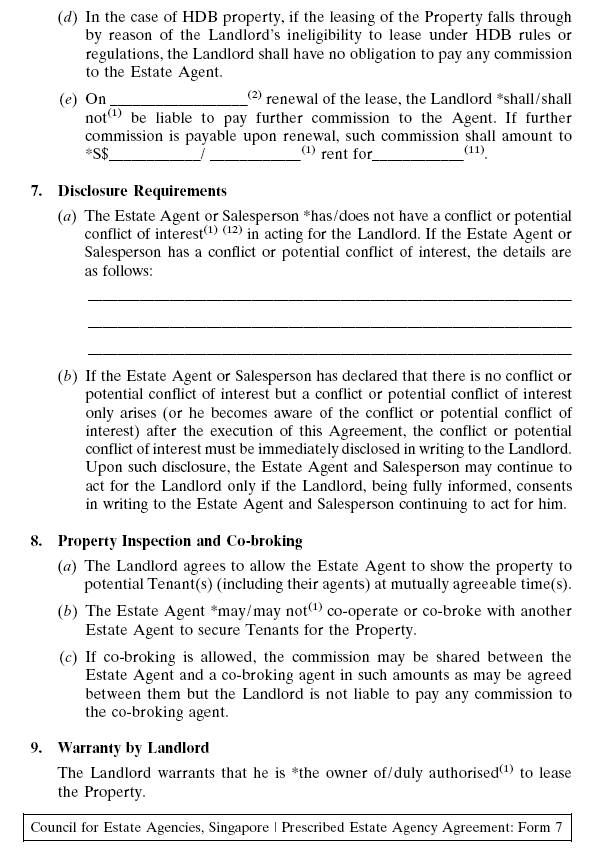
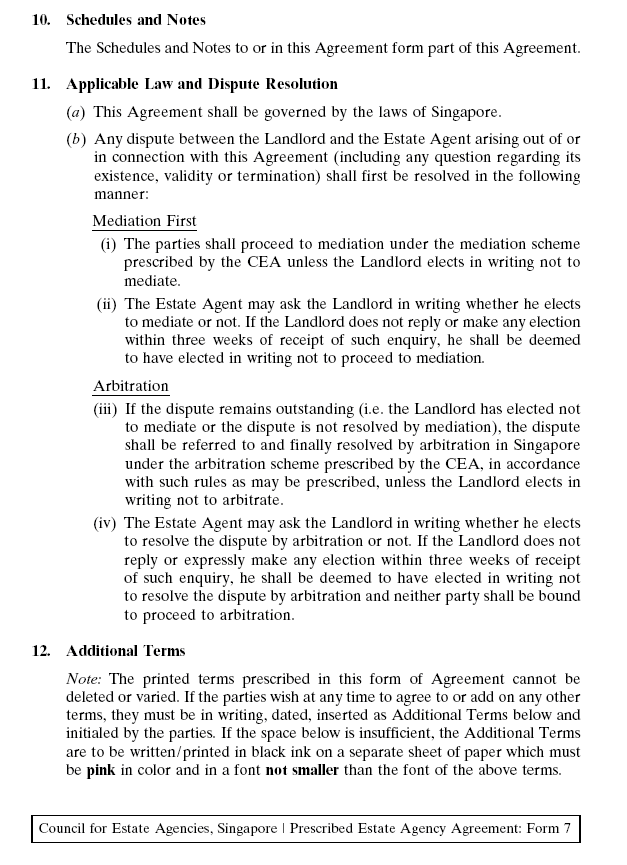
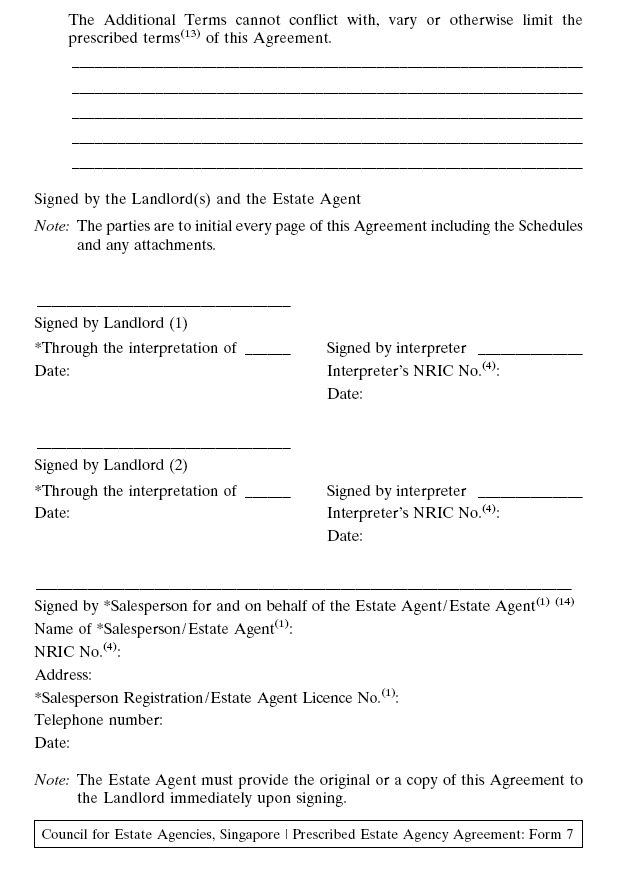
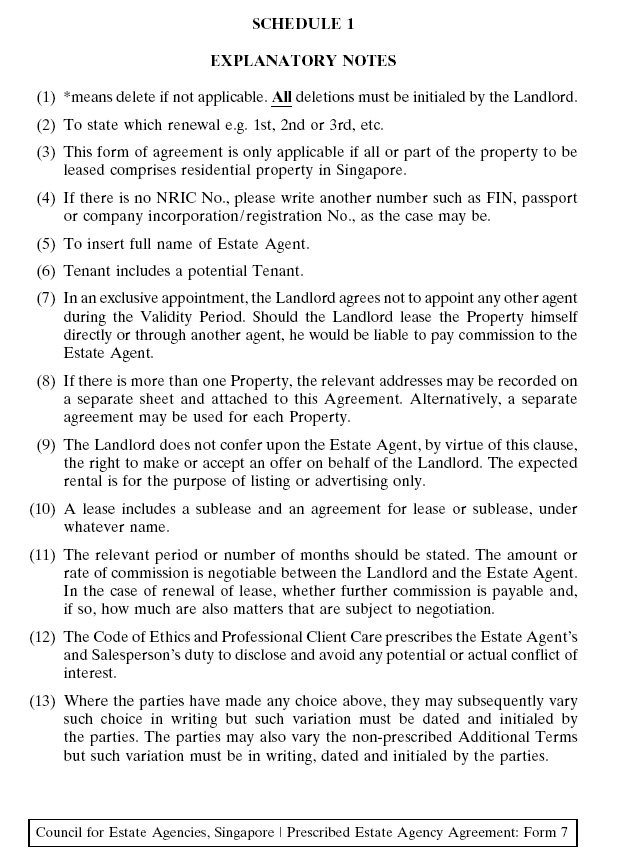
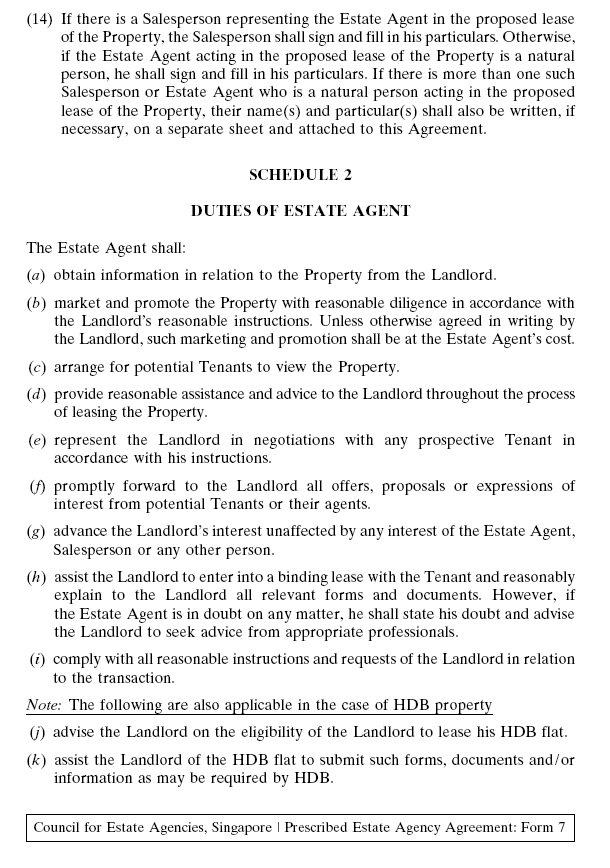
(c)Exclusive estate agency agreement for the lease of residential property by a landlord (Form 7); and
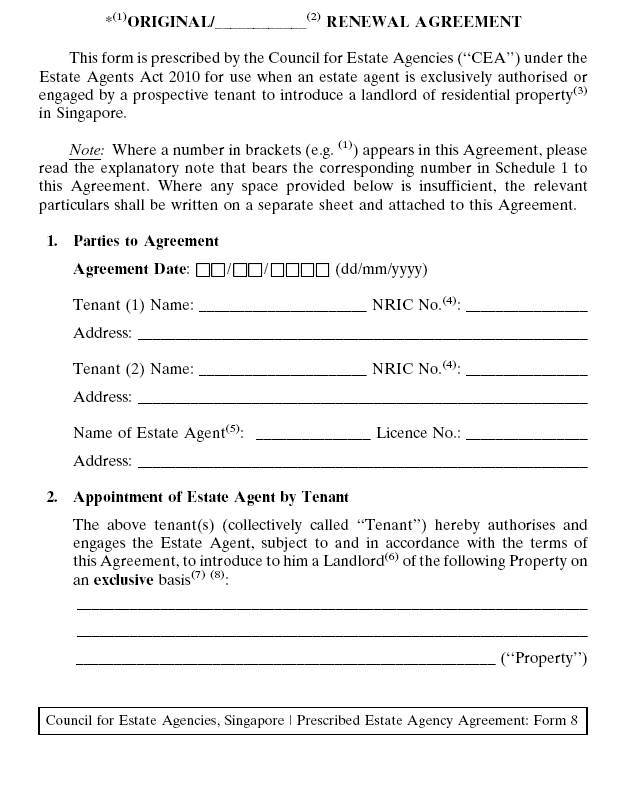
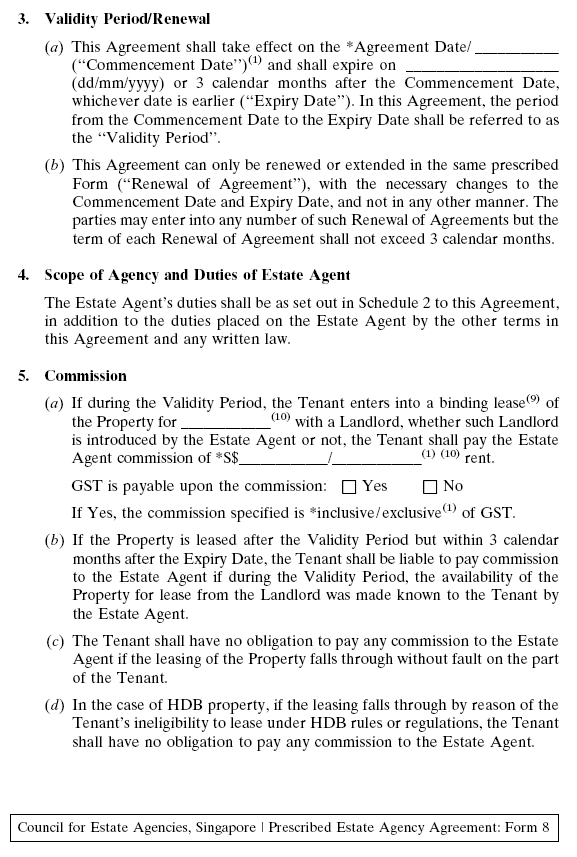
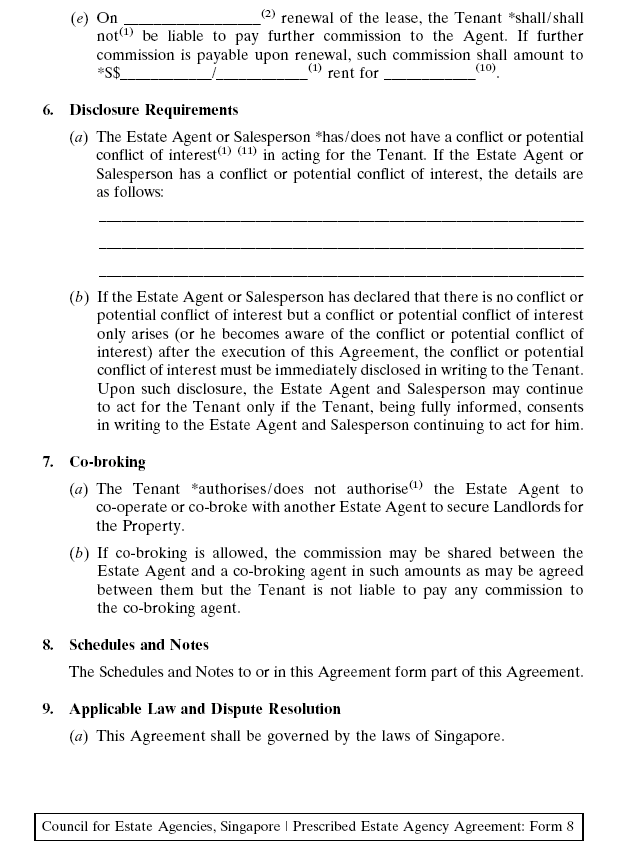
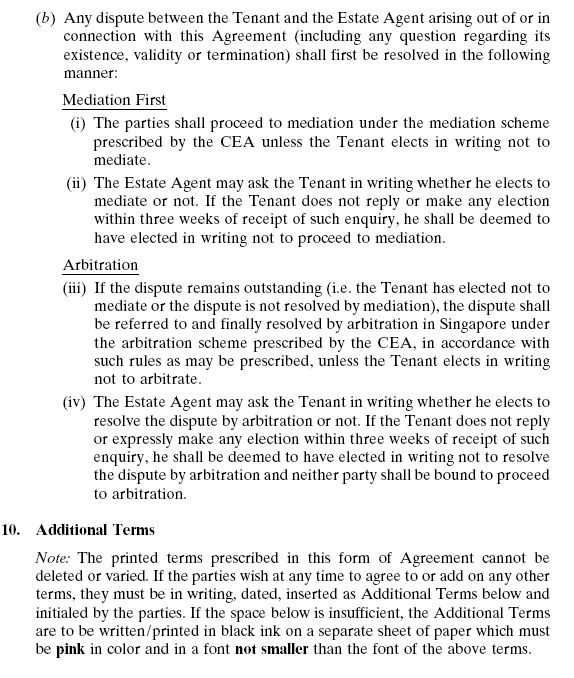
(d)Exclusive estate agency agreement for the lease of residential property by a tenant (Form 8).
(3)  The forms for the prescribed agreements in paragraphs (1) and (2) are set out in the Third Schedule as Forms 1 to 8.
(4)  For the purposes of paragraphs (1) and (2), “residential property” includes any property comprising residential property and property other than residential property.
Exclusion from scope of section 44
11.  Section 44(1) and (2) of the Act shall not apply to any estate agency work —
(a)in respect of property situated outside Singapore;
(b)in respect of commercial or industrial property;
(c)in respect of any actual or proposed collective sale of property under the provisions of Part VA of the Land Titles (Strata) Act (Cap. 158);
(d)in respect of any actual or proposed sale by a developer of property developed by the developer pursuant to a licence issued under the Housing Developers (Control and Licensing) Act (Cap. 130); and
(e)which is not expressly excluded by paragraphs (a) to (d) and for which there is no prescribed agreement under regulation 10.
Client to be informed of inability to perform agreement
12.  An estate agent or a salesperson who is unable for any reason to perform the estate agency agreement shall inform the client immediately.
PART V
PROFESSIONAL INDEMNITY INSURANCE
Professional indemnity insurance requirements
13.—(1)  Every estate agent shall take out and maintain in force at all times during the period in which it carries out estate agency work (whether directly or through salespersons) such insurance as is referred to in paragraph (2) that is of such minimum amount as is referred to in paragraph (3).
(2)  The insurance shall be in respect of civil liability for negligence in the performance of estate agency work.
(3)  Subject to paragraph (4), the minimum amount of insurance cover shall be —
(a)$100,000 for an estate agent who is a sole proprietor and who does not employ or engage any salesperson;
(b)$200,000 for estate agents with 2 to 10 representatives;
(c)$300,000 for estate agents with 11 to 30 representatives;
(d)$400,000 for estate agents with 31 to 50 representatives;
(e)$600,000 for estate agents with 51 to 500 representatives; and
(f)$1,000,000 for estate agents with more than 500 representatives.
(4)  For the purposes of paragraph (3) —
(a)“representative” means any natural person who undertakes or may undertake estate agency work;
(b)the insurance cover may be subject to limitations on the coverage or liability in respect of any particular representative only if the limit is not less than $100,000;
(c)the amount of insurance coverage may include the costs and expenses incurred in the defence or settlement of any insured claim; and
(d)any deductible that may be applicable in respect of any claim against a salesperson shall not exceed $5,000 and any claim against an estate agent shall not exceed —
(i)$5,000 for estate agents with not more than 50 representatives;
(ii)$10,000 for estate agents with more than 50 but not more than 500 representatives; and
(iii)$20,000 for estate agents with more than 500 representatives.
Estate agency work not to be performed without insurance cover
14.  No person shall undertake any estate agency work without the insurance coverage specified under regulation 13.
PART VI
CONTINUING PROFESSIONAL EDUCATION
[S 878/2023 wef 22/12/2023]
Continuing professional education requirements
15.—(1)  For the purposes of section 32A(3) of the Act, a CPE-liable individual must accumulate at least 16 CPE training hours, consisting of the specified number of CPE training hours for each specified class of CPE activities, within each applicable period described in paragraph (1A).
[S 644/2025 wef 01/10/2025]
(1A)  The period mentioned in paragraph (1) is —
(a)each period of 12 months ending on 30 September of 2024 or an earlier calendar year;
(b)the period of 15 months starting on 1 October 2024 and ending on 31 December 2025; or
(c)the calendar year 2026 or a subsequent calendar year.
[S 644/2025 wef 01/10/2025]
(2)  For the purposes of paragraph (1), the Council may —
(a)determine the activities, courses and programmes relating to the continuing professional education of CPE‑liable individuals that qualify as CPE activities;
(b)specify one or more classes of CPE activities;
(c)specify the number of CPE training hours that must be accumulated by a CPE‑liable individual in respect of each specified class of CPE activities;
[S 644/2025 wef 01/01/2026]
(d)specify the number of CPE training hours (being not less than one) that are accumulated upon the successful completion of a CPE activity; and
[S 644/2025 wef 01/01/2026]
(e)determine, whether for all or any particular CPE activity, that CPE training hours may be accumulated upon the successful completion of the CPE activity only if the CPE activity is an accredited CPE activity at the time that the CPE activity is completed.
[S 878/2023 wef 22/12/2023]
[S 644/2025 wef 01/01/2026]
(3)  For the purposes of enabling the Council to determine whether an individual has satisfied the CPE requirements under section 32A(2)(b) of the Act, the estate agent for whom the CPE-liable individual concerned carries out estate agency work must verify and certify in writing to the Council, in the form and manner specified by the Council, the following information concerning any non-accredited CPE activity that the individual has allegedly completed:
(a)that the activity, course or programme concerned is a non-accredited CPE activity of a particular class;
(b)that the individual has successfully completed the activity, course or programme;
(c)the date of completion;
(d)the CPE-liable individual’s attendance records for that activity, course or programme;
(e)the number of hours completed for that activity, course or programme.
[S 644/2025 wef 01/01/2026]
(4)  A CPE-liable individual and the estate agent for whom that CPE-liable individual carries out estate agency work must each keep the following records of any non-accredited CPE activity that the individual has successfully completed, for a period of 5 years after the date of completion of that CPE activity:
(a)the CPE-liable individual’s attendance records for that CPE activity;
(b)any document that is evidence that the CPE-liable individual has successfully completed that CPE activity.
[S 644/2025 wef 01/01/2026]
(5)  In this regulation, “non-accredited CPE activity” means a CPE activity that is not an accredited CPE activity.
[S 644/2025 wef 01/01/2026]
Accreditation of CPE activity
16.—(1)  This regulation applies in respect of any CPE activity for which the Council has determined that CPE training hours may be accumulated upon the successful completion of the CPE activity only if the CPE activity is an accredited CPE activity at the time that the CPE activity is completed.
[S 644/2025 wef 01/01/2026]
(2)  An application for the accreditation of a CPE activity by the provider of a CPE activity must —
(a)be made to the Council in the form and manner specified by the Council;
(b)be accompanied by any information or document specified by the Council; and
(c)be accompanied by the application fee (if any) specified in the Estate Agents (Fees) Regulations 2010 (G.N. No. S 641/2010).
(3)  The Council may approve an application for the accreditation of a CPE activity if the Council is satisfied with the content of the CPE activity, and the conduct or provision of the CPE activity by the provider of the CPE activity.
(4)  An approval of an application for accreditation of a CPE activity —
(a)is, subject to paragraph (7), valid for any period (being a period not less than one month) that the Council may determine; and
(b)is subject to such conditions as the Council may specify.
(5)  The conditions mentioned in paragraph (4)(b) include conditions —
(a)relating to the content of the CPE activity;
(b)relating to the standards to be applied in the conduct or provision of the CPE activity by the provider of the CPE activity;
(c)permitting the Council to monitor and audit the conduct of or provision of the CPE activity by the provider of the CPE activity;
(d)relating to documents, information and other records, in respect of the CPE activity, to be kept by the provider of the CPE activity, and the period for which such documents, information and other records must be maintained; and
(e)relating to the use of advertisements, by or on behalf of the provider of the CPE activity, for the purposes of promoting or otherwise advertising the CPE activity to CPE‑liable individuals.
(6)  The Council may add, delete, substitute or modify any conditions of approval of the accreditation of a CPE activity.
(7)  If the Council is satisfied that any of the conditions of approval of the accreditation of a CPE activity specified under paragraph (4)(b) or (6) are not or have ceased to be met (called in this paragraph the breached conditions), the Council may —
(a)suspend the approval of the accreditation of the CPE activity, whether for any period (being a period not longer than 2 years) that the Council may determine or until the Council is satisfied that the breached conditions are met; or
(b)revoke the approval of the accreditation of the CPE activity.
[S 878/2023 wef 22/12/2023]
FIRST SCHEDULE
Regulation 3
Estate Agents Act 2010
Code of Ethics and Professional Client Care
Application of Code to estate agents and salespersons
1.—(1)  This Code shall be known as the Code of Ethics and Professional Client Care and shall apply to every licensed estate agent and every registered salesperson.
(2)  This Code sets the standard of performance required of estate agents and salespersons in their dealings with clients and the public while carrying out estate agency work.
(3)  This Code must be read in conjunction with the Estate Agents Act 2010 (“the Act”) and practice circulars or guidelines issued by the Council for Estate Agencies (“the Council”) from time to time.
(4)  A failure to observe this Code or any law applicable to estate agents and salespersons may constitute unsatisfactory professional conduct or professional misconduct.
(5)  An offer, attempt, inducement or instigation to do anything that would constitute a breach of this Code if fully executed or completed is also a breach of this Code.
Definitions
2.  In this Code, unless the context otherwise requires —
“clients” includes prospective clients or customers;
“practice circulars or guidelines” means practice circulars or guidelines in relation to estate agency work which the Council may issue from time to time.
Violation of Code
3.—(1)  Estate agents and salespersons who breach any provision of this Code may be subject to disciplinary action before a Disciplinary Committee formed under the Act.
(2)  A breach of any provision of this Code may result in the imposition of sanctions including financial penalties, demerit points and the suspension or revocation of a licence or registration under the Act.
Knowledge of and compliance with applicable laws, practice circulars and guidelines
4.—(1)  Estate agents and salespersons must perform their work in accordance with applicable laws and must not perform estate agency work unless they have the relevant knowledge to perform the work that they are engaged to perform.
(2)  Sub-paragraph (1) means, among other things, that estate agents and salespersons —
(a)must be fully conversant and comply with the Act, the regulations made under the Act (including this Code and in the case of estate agents, the Code of Practice for Estate Agents), and the policies, practice circulars and guidelines of the Council;
(b)must be fully conversant and comply with relevant laws, regulations and rules that apply to property transactions;
(c)must keep themselves informed of essential or relevant facts and developments in the property market and matters that could affect any aspect of property transactions;
(d)must be familiar with the procedures for property transactions, and the contents of the forms used; and
(e)must not undertake estate agency work in respect of Housing and Development Board flats unless they are fully conversant and comply with the applicable laws, regulations, rules and procedures that apply to transactions involving such flats.
Due diligence and compliance with law and statutory requirements
5.—(1)  Estate agents and salespersons shall conduct their business and work with due diligence, despatch and care, and in compliance with all laws including statutory and regulatory requirements, and practice circulars and guidelines.
(2)  Sub-paragraph (1) means, among other things, that estate agents and salespersons, in conducting estate agency business or work —
(a)must comply with and shall not do or attempt to do anything that infringes, or which may directly or indirectly lead to the infringement by any person of any law; and
(b)must take all reasonable precautions and do all reasonable acts to ensure that no law is infringed by any person.
General duty to clients and public
6.—(1)  Estate agents and salespersons shall render professional and conscientious service to their clients and shall act with honesty, fidelity and integrity.
(2)  Sub-paragraph (1) means, among other things, that estate agents and salespersons —
(a)must act according to the instructions of the client and protect and promote the interests of the client, unaffected by the interests of the estate agent, salesperson or any other person;
(b)must not mislead the client or provide any false information or misrepresent any relevant law or fact to the client;
(c)must keep the client informed of any material or relevant development or issue in respect of the property of the client;
(d)must not withhold any relevant fact or information from the client; and
(e)must not act against the interests of the client in any manner, including collaborating in any form or manner with any other person.
(3)  In the conduct of estate agency work on behalf of the client, the estate agent or salesperson must act ethically, honestly, fairly and in a reasonable manner towards all other persons.
(4)  Sub-paragraph (3) means, among other things, that estate agents and salespersons —
(a)must not collaborate with or induce or attempt to induce the client or any other person to engage in illegal, dishonest or unethical practices;
(b)must not overstate or convey a false impression of any relevant information; and
(c)must not mislead or provide any false information or misrepresent any relevant law or fact.
Not to bring discredit or disrepute to real estate industry
7.—(1)  Estate agents and salespersons shall not do anything that may bring discredit or disrepute to the estate agency trade or industry.
(2)  Sub-paragraph (1) means, among other things, that estate agents and salespersons —
(a)must not do anything that may be fraudulent, dishonest, deceitful or misleading;
(b)must not engage in touting; and
(c)must not use threatening or harassing tactics or apply unreasonable or improper pressure.
(3)  Any opinion that is rendered by an estate agent or a salesperson to the client or any other person shall be justifiable by reference to verifiable facts and shall be given with strict professional integrity, objectivity and courtesy.
(4)  Estate agents and salespersons must not solicit for the payment of any reward, commission or fee from any person who did not engage their services.
Duty to clients in relation to signing of documents
8.—(1)  Estate agents and salespersons must give the client sufficient time to read any form or document before asking or allowing the client to sign the form or document.
(2)  Before asking or allowing a client to sign any form or document, estate agents and salespersons must explain the meaning and consequences of the provisions of the form or document.
(3)  An estate agent or salesperson with any doubt in relation to any form or document must inform the client accordingly and advise the client to seek advice from appropriate professionals.
(4)  The client must be given a copy of any form or document that he signs either immediately or as soon as possible after signing.
Obligations in respect of agreements
9.—(1)  Estate agents and salespersons must ensure that all agreements concerning financial obligations and commitments in respect of any transaction are in writing, and record the exact agreement between the parties concerned.
(2)  Estate agents and salespersons shall also comply with the following requirements:
(a)they must procure signatures of all joint vendors or landlords for the sale or lease of property, and those of all joint buyers or tenants for the purchase or rental of property;
(b)they must ensure that a copy of the agreement is given to every person who signs the agreement, either immediately or as soon as possible after signing;
(c)they must allow any party reasonable time to read the agreement before signing it, and to seek appropriate advice if he or she so desires; and
(d)they must not ask or procure anyone to sign an agreement in which essential or material terms or information such as the property address, price, dates, names, and commission payable have been omitted or the relevant space for such terms or information is left blank or unfilled.
Conveying offers, counter offers, etc.
10.  An estate agent or salesperson shall submit every offer, counter-offer, proposal or expression of interest received to his client accurately, objectively and as soon as possible after receiving it.
Interpretation or translation if necessary
11.  An estate agent or salesperson shall ensure that any information or explanation is conveyed to the client in the language or dialect that the client understands.
Duties in respect of advertisements
12.—(1)  Estate agents and salespersons must ensure that they are correctly and clearly identified in —
(a)all their advertisements and promotional materials; and
(b)their correspondence, email signatures, letterheads, notepapers and name, calling or any other cards.
(2)  Sub-paragraph (1) means, among other things, that the following information must be correctly and clearly stated —
(a)the name and contact number of the estate agent and salesperson as registered with the Council; and
(b)the licence and registration numbers of the estate agent and salesperson.
(3)  Where advertisements are in the form of classified advertisements printed in newspapers, the estate agent or salesperson must use the name and contact numbers that are registered with the Council but need not state the licence or registration number of the estate agent or salesperson.
(4)  Estate agents and salespersons must also comply with the following requirements in respect of any form of advertising including name, calling or any other cards:
(a)they must not cause or allow to be made any advertisement that contains any offer, proposal, statement, representation, claim or information that is inaccurate, false or misleading;
(b)they must ensure that all materials that advertise or promote a property accurately describe the property;
(c)any claims of expertise, specialisation or success rate can be substantiated by verifiable facts and records;
(d)they must obtain the prior agreement of the client before advertising any property of the client for any purpose, including sale or rental;
(e)they must not advertise any property at a price or on other terms, or in any manner, different from those instructed by the client;
(f)the advertisement shall not include any transaction information about any specific property (including the name of the parties, the sale and purchase price, rent payable and any other terms of the transaction), without the consent in writing of all the parties to the transaction, regardless of whether the salesperson or estate agent had been involved in the transaction;
(g)the advertisement and its placement shall not directly or indirectly infringe any law or legal rights; and
(h)they must remove all advertisements in relation to a property once the property is no longer available for sale or rental for whatever reason, or after the termination of the estate agency agreement in respect of the property.
Duty to avoid conflict of interests
13.—(1)  Estate agents and salespersons must not accept an appointment by or continue to act on behalf of a client where to do so would place the agent’s or salesperson’s interests in conflict or potential conflict with those of the client.
(2)  Sub-paragraph (1) means, among other things, that —
(a)estate agents and salespersons must, as soon as possible, declare in writing to the client any interest which may arise at any time and be in direct or indirect conflict with that of the client;
(b)if, on the grounds of confidentiality or for any other reason, an estate agent or salesperson is unable to make a declaration of conflict or potential conflict, the estate agent or salesperson shall decline to act for or withdraw from acting for the client;
(c)unless the client being fully informed of any conflict or potential conflict, consents to the estate agent and salesperson acting or continuing to act for him, the estate agent and salesperson shall decline to act for or withdraw from acting for the client;
(d)estate agents and salespersons must not acquire directly or indirectly, the property of the client or any right or interest in the property of the client, without the express knowledge and consent of the client; and
(e)subject to any written law, estate agents and salespersons must not directly or indirectly accept any fee, reward, commission, rebate or other payment for the referral of any services rendered or to be rendered by third parties to the client or any other party, in connection with a transaction involving the client, without the express knowledge and prior consent in writing of the client.
(3)  Sub-paragraph (2)(e) means, among other things, that the estate agent or salesperson, as the case may be, must disclose in advance, and in writing, both the fact and quantum of such fee, reward, commission, rebate or other payment.
(4)  Estate agents and salespersons must not engage in any business, work or professional activity where such business, work or activity would, or could reasonably be expected to, compromise the discharge of their obligations to their clients.
Recommending professional advice where appropriate
14.  Estate agents and salespersons shall advise and encourage the parties to a transaction or proposed transaction to seek the advice of appropriate professionals, including but not limited to solicitors, tax advisers, appraisers and valuers, where there is any material matter or issue that is beyond their knowledge or expertise.
Safeguarding confidential information
15.—(1)  Estate agents and salespersons shall not disclose or otherwise use any confidential information of or relating to the client that is obtained from the client or obtained in the course of acting for the client unless the disclosure or use is made with the consent of the client, or is otherwise required or allowed by the law.
(2)  Disclosure under sub-paragraph (1) may be made only to the appropriate person and only to the extent authorised and extent necessary for the permitted purpose.
SECOND SCHEDULE
Regulation 4
Estate Agents Act 2010
Code of Practice for Estate Agents
Application of Code to estate agents
1.—(1)  This Code shall be known as the Code of Practice for Estate Agents and shall apply to every licensed estate agent.
(2)  This Code must be read in conjunction with the Estate Agents Act 2010 (“the Act”) and practice circulars or guidelines issued by the Council for Estate Agencies (“the Council”) from time to time.
(3)  A failure to observe this Code or any law applicable to estate agents may constitute unsatisfactory professional conduct or professional misconduct.
(4)  An offer, attempt, inducement or instigation to do anything that would constitute a breach of this Code if fully executed or completed is also a breach of this Code.
Definitions
2.  In this Code, unless the context otherwise requires —
“clients” includes prospective clients or customers;
“Code of Ethics and Professional Client Care” means the Code of Ethics and Professional Client Care prescribed by the Council that applies to estate agents and salespersons;
“practice circulars or guidelines” means practice circulars or guidelines in relation to estate agency work which the Council may issue from time to time.
Violation of Code
3.—(1)  Estate agents who breach any provision of this Code may be subject to disciplinary action before a Disciplinary Committee formed under the Act.
(2)  A breach of any provision of this Code may result in the imposition of sanctions including financial penalties, demerit points and the suspension or revocation of a licence under the Act.
Management and supervision
4.—(1)  Estate agents shall have in place and document in writing proper systems and processes —
(a)to ensure that their salespersons acquire and have the estate agency work knowledge referred to in paragraph 4 of the Code of Ethics and Professional Client Care; and
(b)for the management and supervision of their business and salespersons.
(2)  Estate agents shall manage and supervise their salespersons to ensure that their salespersons —
(a)comply with the laws or legal obligations or requirements stated in paragraph 5 of the Code of Ethics and Professional Client Care;
(b)conduct their estate agency work in a professional and reasonable manner and in accordance with the law; and
(c)avoid repeating the conduct of any salesperson or other person employed or engaged by the estate agent which resulted in a breach of the law or disciplinary action.
(3)  Estate agents shall vet all publicity and advertising materials of their salespersons prior to publication.
Estate agent card
5.—(1)  Estate agents must issue an identification card labelled as an estate agent card to each and every one of their salespersons and partners or the sole proprietor, if applicable.
(2)  The estate agent card shall be in such form and of such specifications as the Council may require.
(3)  The estate agent card shall include the following information:
(a)the name and licence number of the estate agent;
(b)the name and registration number of the holder of the card;
(c)a recent image of the holder of the card; and
[S 708/2015 wef 19/11/2015]
(d)a contact number or email address for the making of inquiries or complaints to the estate agent.
[S 708/2015 wef 19/11/2015]
(e)[Deleted by S 708/2015 wef 19/11/2015]
(4)  No person shall be issued with or hold more than one estate agent card at any time.
(5)  No estate agent card shall be replaced unless the person seeking a replacement makes an application to the estate agent in writing with the reason for the replacement.
(6)  The estate agent must maintain proper records of all estate agent cards issued, which must include the following information:
(a)the holder’s personal particulars;
(b)the licence or registration number of the holder;
(c)the date of issue of the card and the expiry date of the licence or registration; and
(d)the reason for the issue of any replacement card.
(7)  The estate agent shall recover the card issued to a holder in the following circumstances:
(a)when the holder ceases to be engaged or employed by, or otherwise part of, the estate agent;
(b)when the licence or registration of the holder expires, is not renewed, or is suspended or cancelled; or
(c)when the holder applies for a replacement estate agent card.
(8)  The name of the holder in the estate agent card shall be —
(a)the name of the holder as printed in the holder’s identity card issued under the National Registration Act (Cap. 201); or
(b)if the holder has not been issued with an identity card under the National Registration Act, the holder’s name as stated in the holder’s passport or any other official identification document, which should be preceded by descriptive words that identify the authority issuing the identification document.
(9)  Any business or other name of the holder that is stated in the estate agent card shall be printed within brackets below the name as specified in sub-paragraph (8).
Claims and complaints
6.—(1)  Estate agents must have in place a system with suitable processes for the receipt and investigation of claims and complaints against the estate agent or any of their salespersons.
(2)  The system and processes must be documented in writing.
(3)  All claims and complaints against the estate agent or any of its salespersons must be investigated.
(4)  Any investigation under paragraph (3) must be completed within 2 weeks of the receipt of a claim or complaint, or such longer time as the Council may allow.
(5)  Where the complainant is making a claim against the estate agent or a salesperson, the estate agent shall meet with the complainant to explore the possibility of an amicable resolution.
(6)  The complainant must be expeditiously informed of the outcome of the investigation.
(7)  On the request of the Council in any particular case, the estate agent shall furnish the Council, within 2 weeks of the request or such longer time as the Council may allow, with a report on the investigation of the case and details of such action as may have been taken by the estate agent and salesperson, and the outcome thereof.
Retention of documents and records
7.—(1)  For the purposes of the Act, an estate agent must retain possession of the originals or keep copies of the following documents for at least 5 years:
(a)all applications to the Council in respect of estate agent’s licence and the registration of salespersons under the Act, including supporting documents;
(b)all estate agent and salesperson agreements;
(c)all estate agency agreements;
(d)all documents relating to property transactions, including —
(i)sale and purchase agreements, and options to purchase;
(ii)lease and lease agreements, and letters of intent to lease;
(iii)Housing and Development Board documents and forms, including Resale Checklists and approvals for the sub-letting of Housing and Development Board flats;
(iv)documents evidencing the receipt and payment of transaction monies;
(v)powers of attorney and letters of authorisation; and
(vi)declarations made by estate agents or salespersons of any conflict or potential conflict of interests; and
(e)all documents and correspondence in respect of claims or complaints, including the result of investigations and any action taken.
[S 708/2015 wef 19/11/2015]
(2)  Copies of documents retained for the purposes of paragraph (1) may be in electronic form.
(3)  Paragraphs (1) and (2) do not affect any statutory obligation or requirement that may require the retention of documents or records for other purposes or for a different period of time.
THIRD SCHEDULE
Regulation 10
Estate Agents Act 2010
FORM 1
UNKNOWN
UNKNOWN
UNKNOWN
UNKNOWN
UNKNOWN
UNKNOWN
UNKNOWN
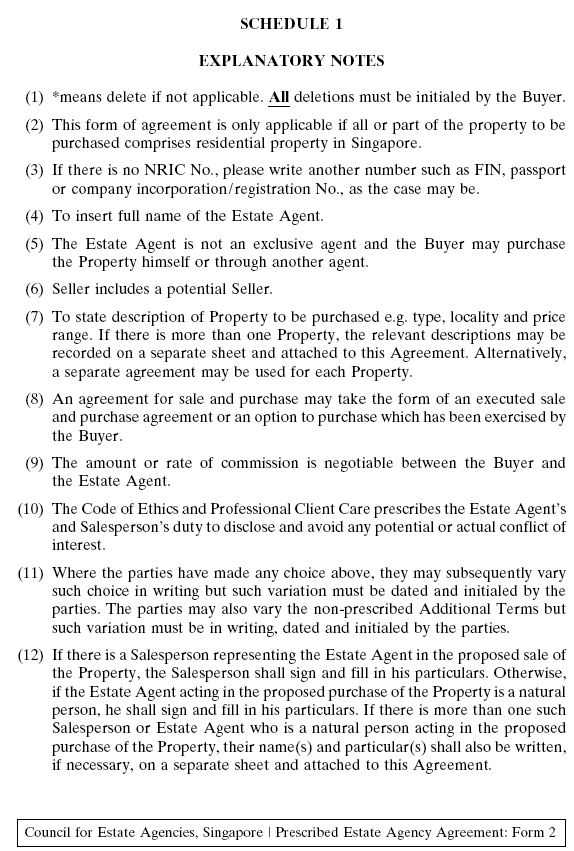
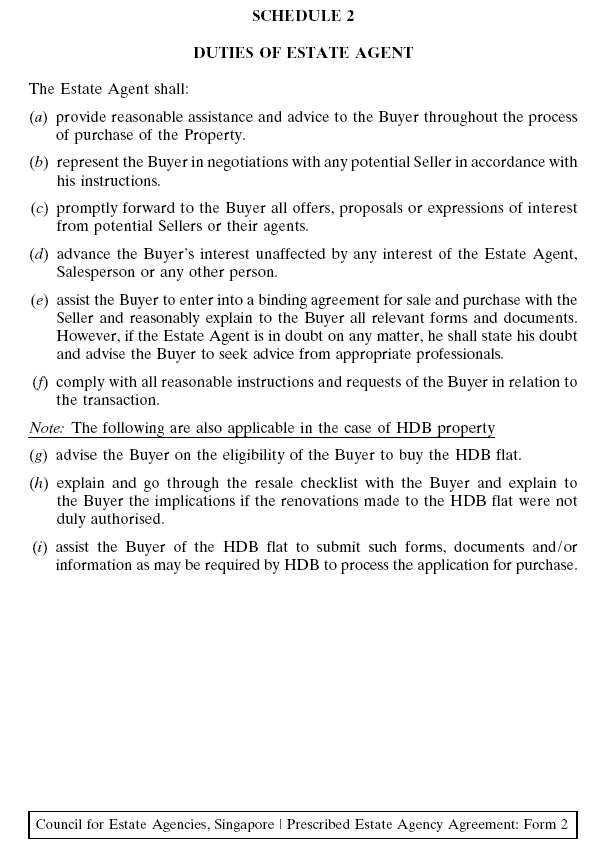
FORM 2
ESTATE AGENCY AGREEMENT FOR
PURCHASE OF RESIDENTIAL PROPERTY
UNKNOWN
UNKNOWN
UNKNOWN
UNKNOWN
UNKNOWN
UNKNOWN
UNKNOWN
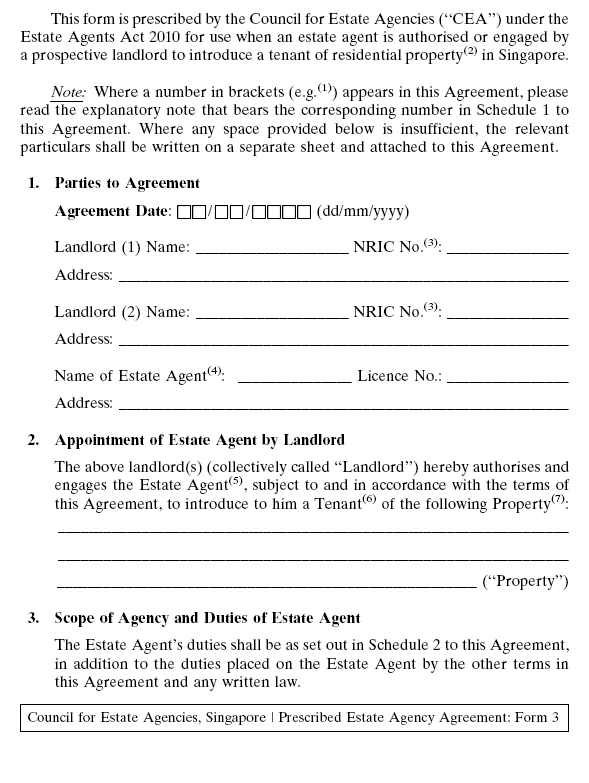
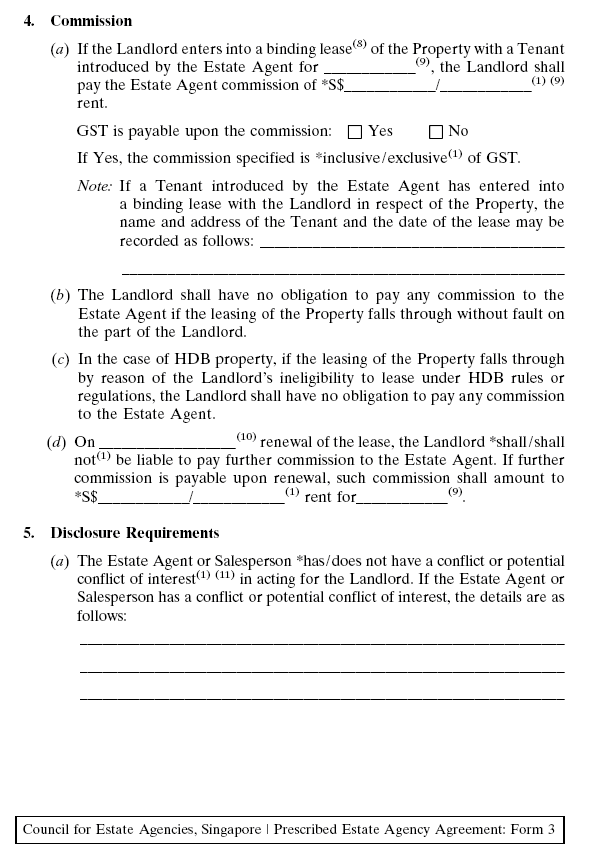
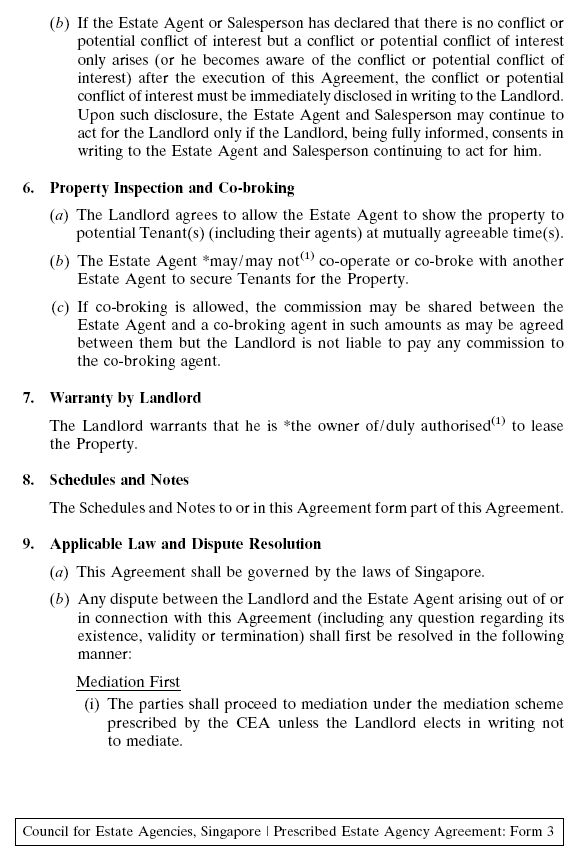
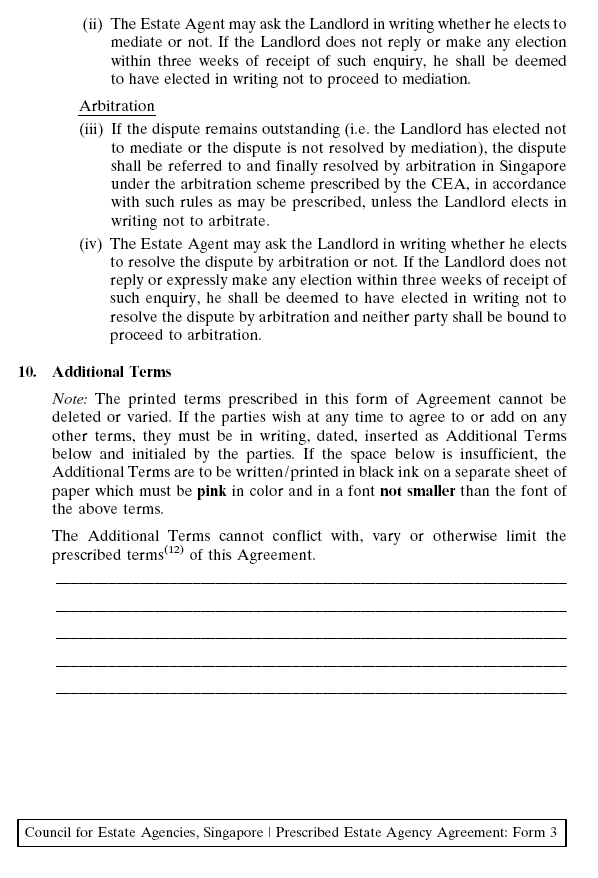
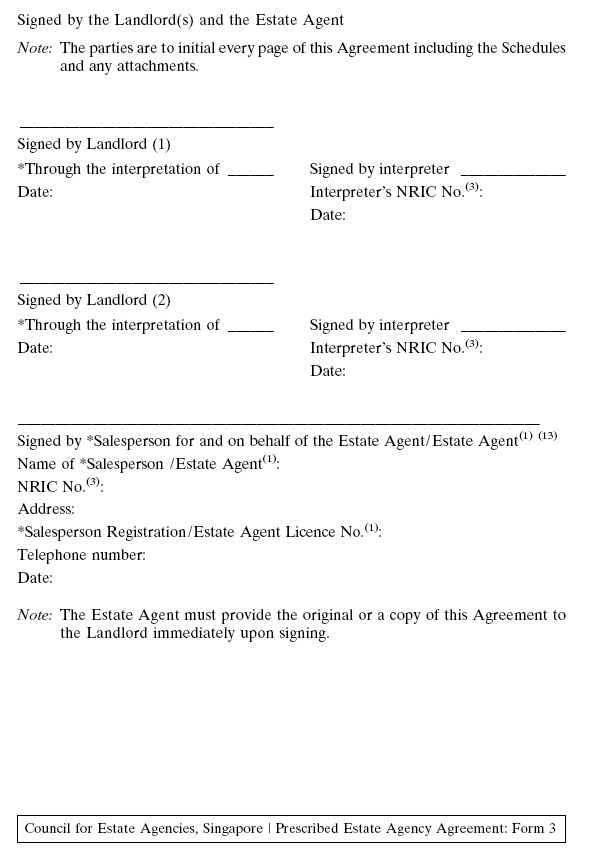
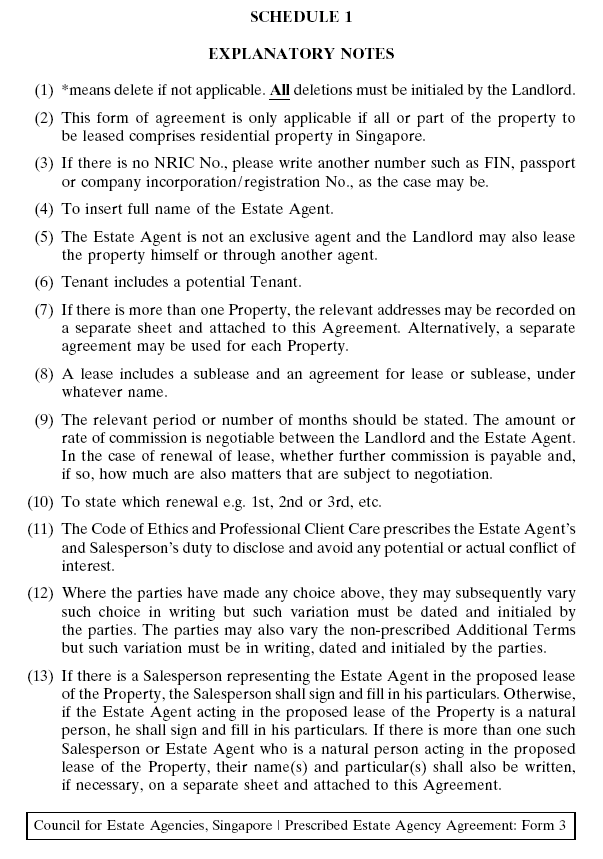
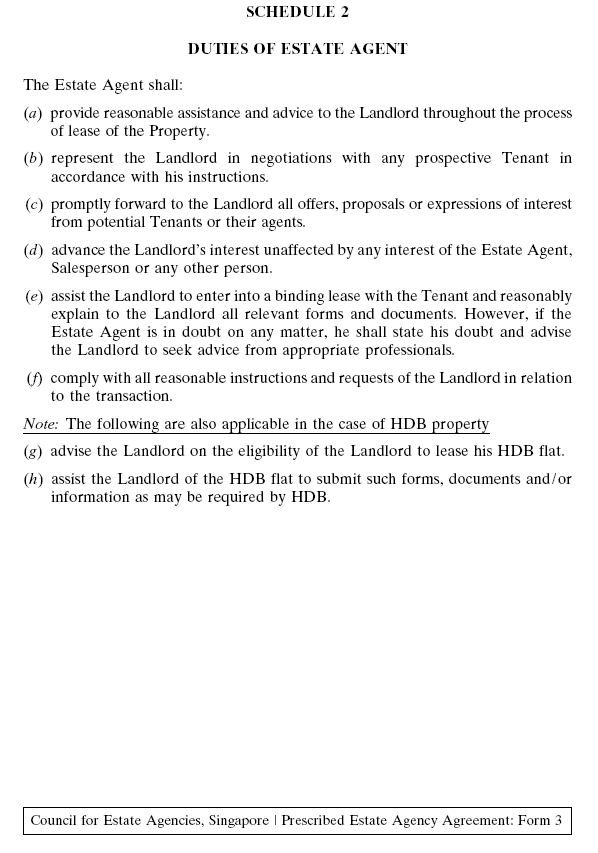
FORM 3
ESTATE AGENCY AGREEMENT FOR
LEASE OF RESIDENTIAL PROPERTY
BY A LANDLORD
UNKNOWN
UNKNOWN
UNKNOWN
UNKNOWN
UNKNOWN
UNKNOWN
UNKNOWN
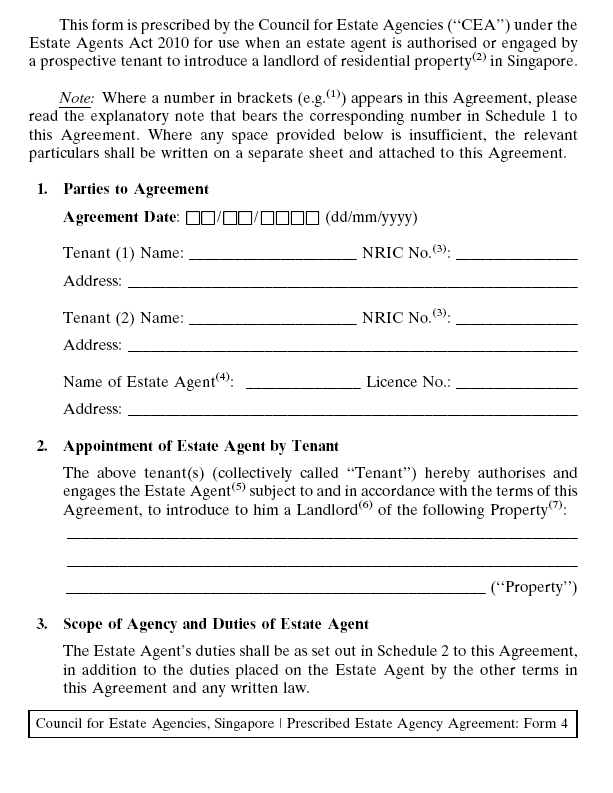
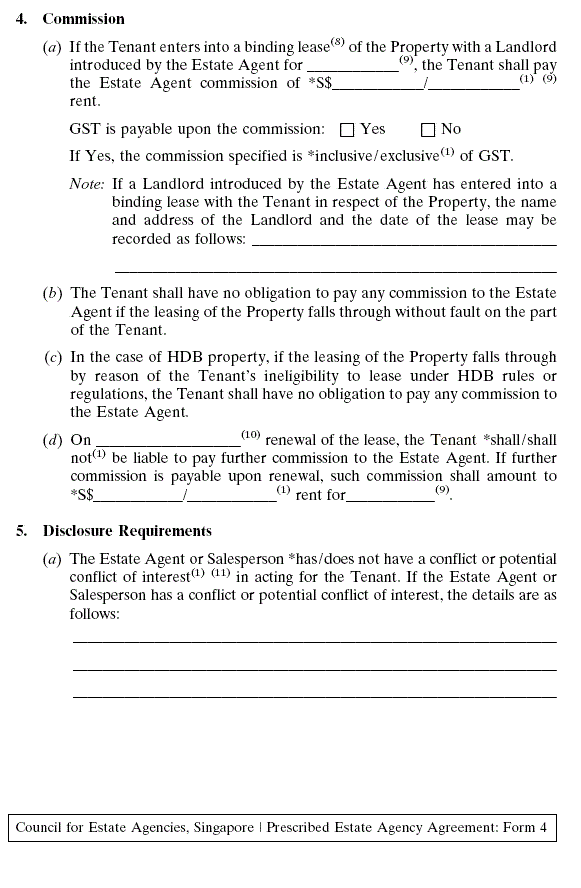
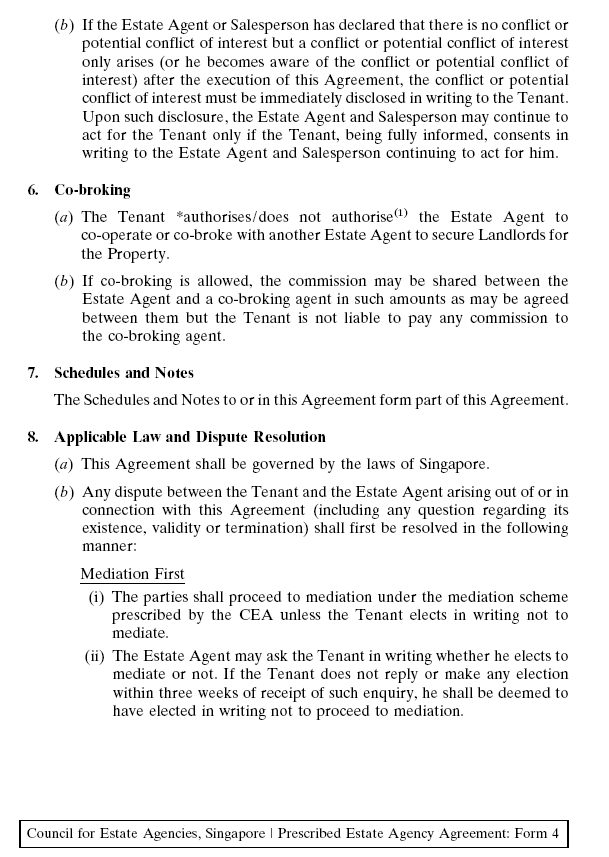
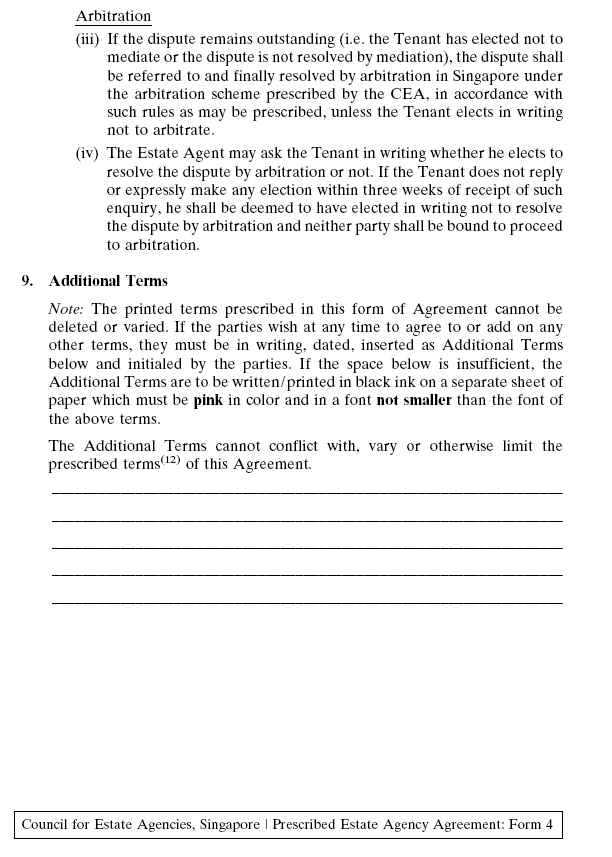
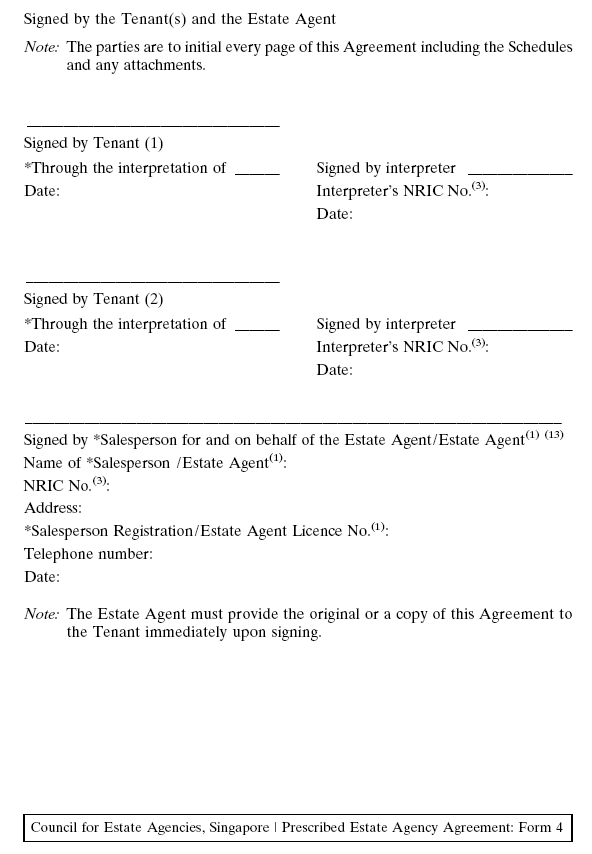
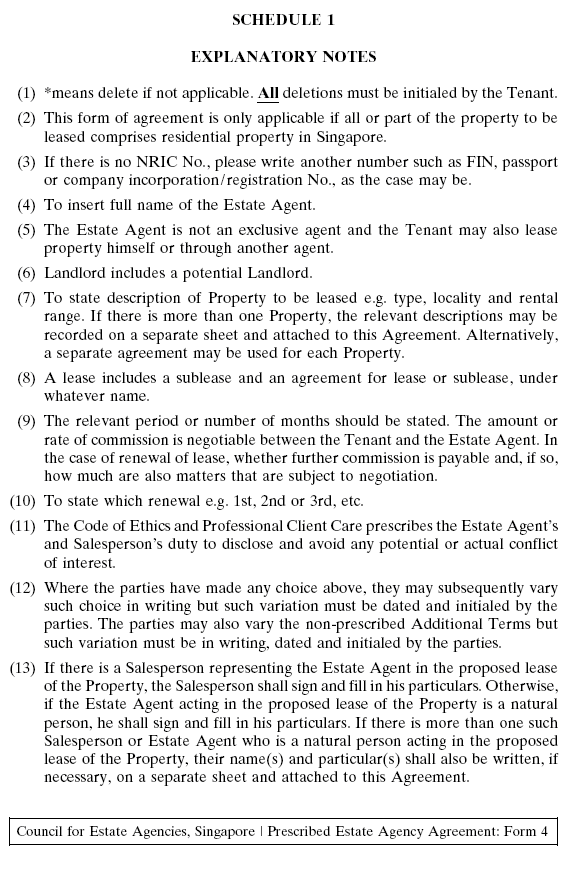
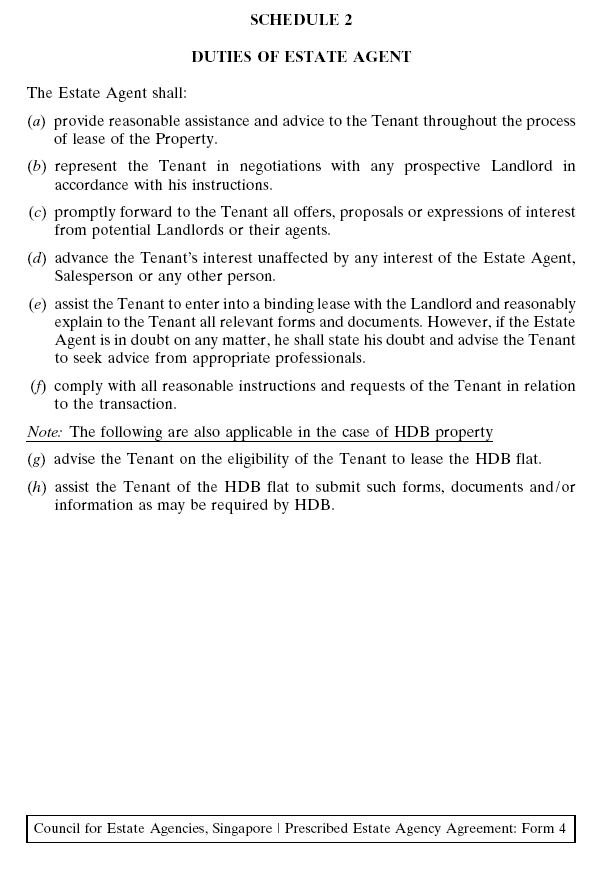
FORM 4
ESTATE AGENCY AGREEMENT FOR
LEASE OF RESIDENTIAL PROPERTY
BY A TENANT
UNKNOWN
UNKNOWN
UNKNOWN
UNKNOWN
UNKNOWN
UNKNOWN
[S 652/2019 wef 01/10/2019]
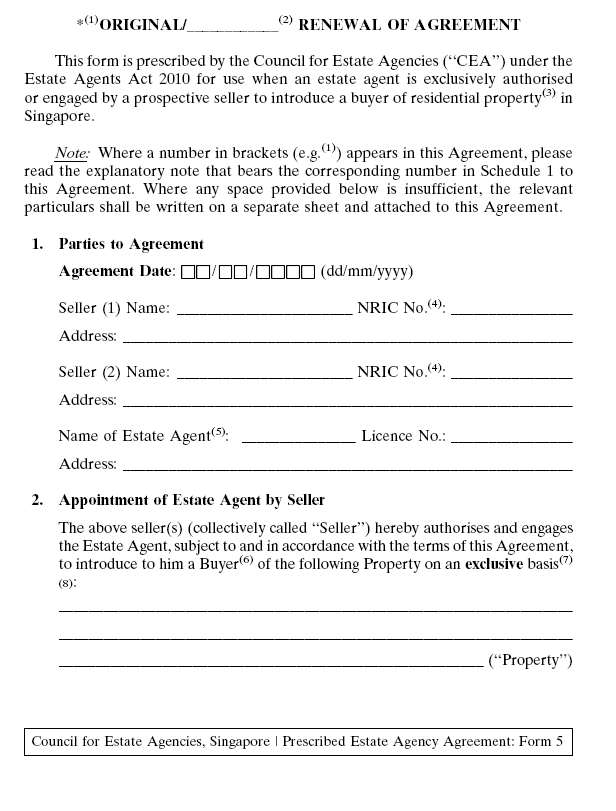
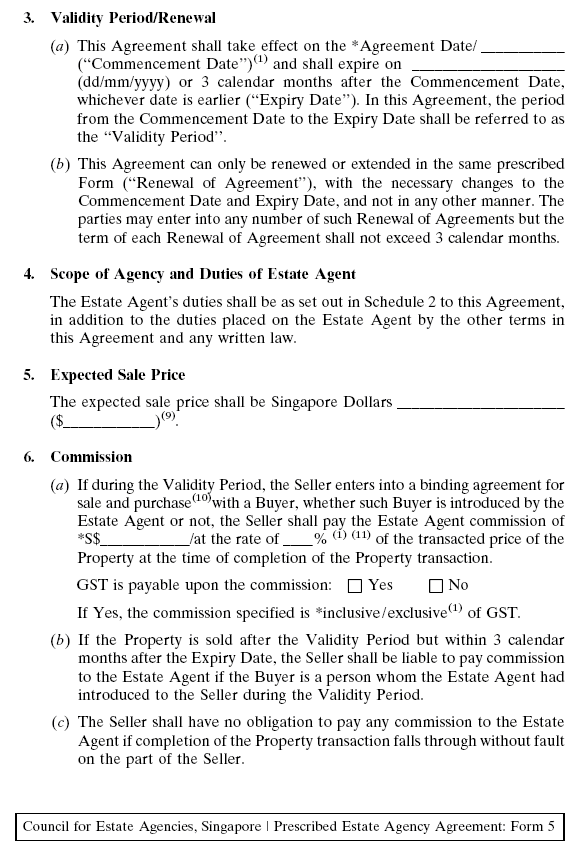
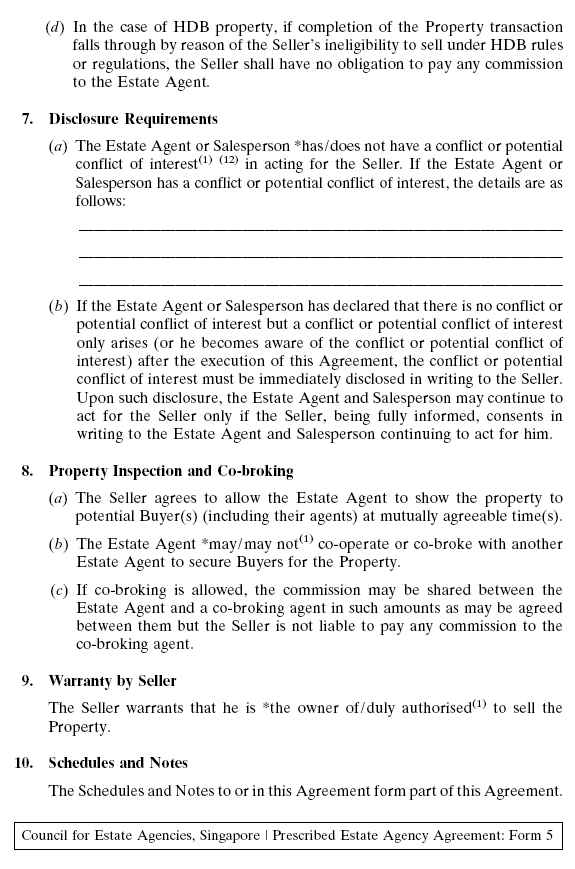
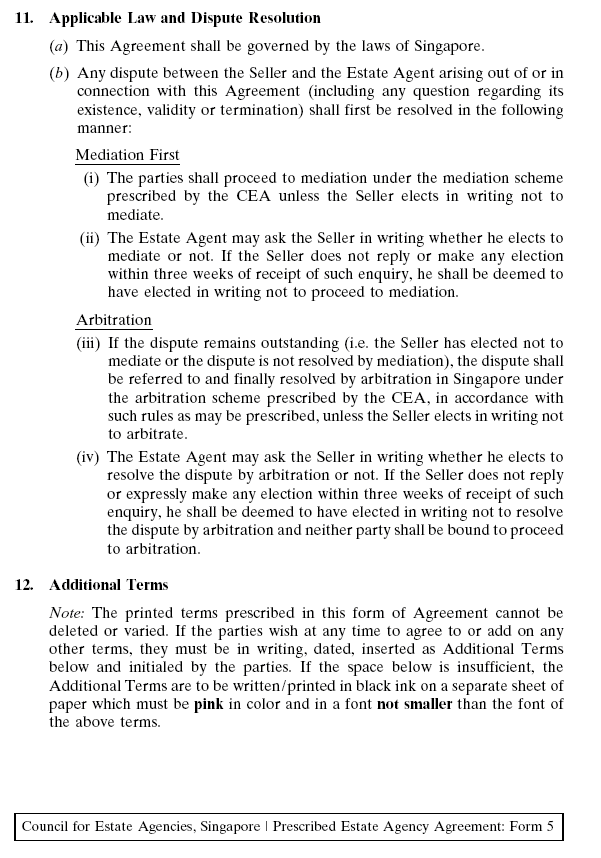
FORM 5
EXCLUSIVE ESTATE AGENCY AGREEMENT FOR
SALE OF RESIDENTIAL PROPERTY
UNKNOWN
UNKNOWN
UNKNOWN
UNKNOWN
UNKNOWN
UNKNOWN
UNKNOWN
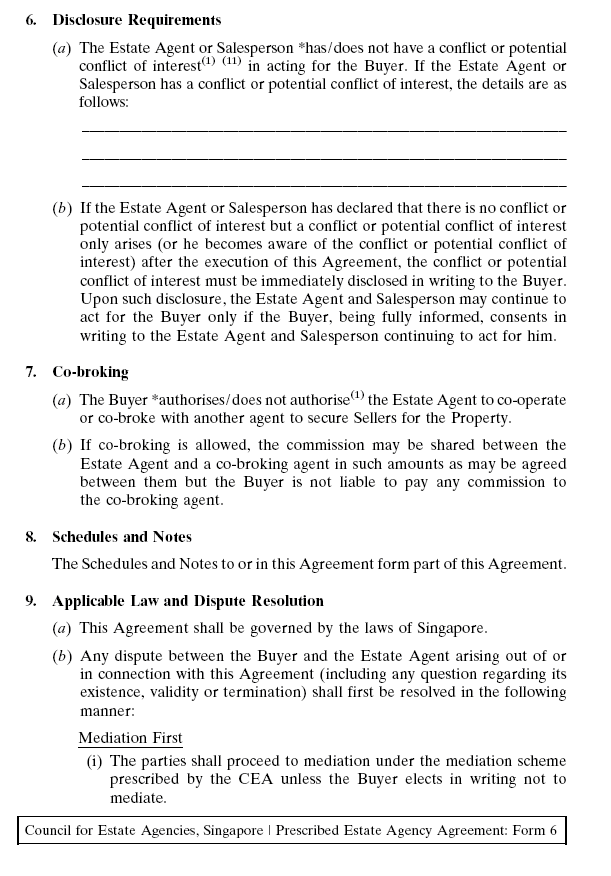
FORM 6
FOR THE PURCHASE OF RESIDENTIAL PROPERTY
UNKNOWN
UNKNOWN
UNKNOWN
UNKNOWN
UNKNOWN
UNKNOWN
UNKNOWN
FORM 7
EXCLUSIVE ESTATE AGENCY AGREEMENT FOR
LEASE OF RESIDENTIAL PROPERTY
BY A LANDLORD
UNKNOWN
UNKNOWN
UNKNOWN
UNKNOWN
UNKNOWN
UNKNOWN
UNKNOWN
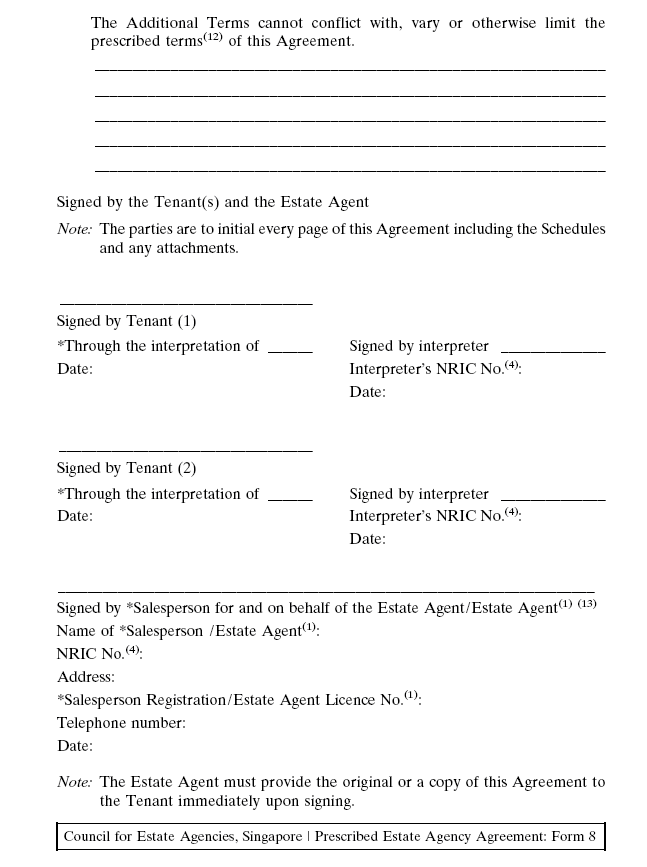
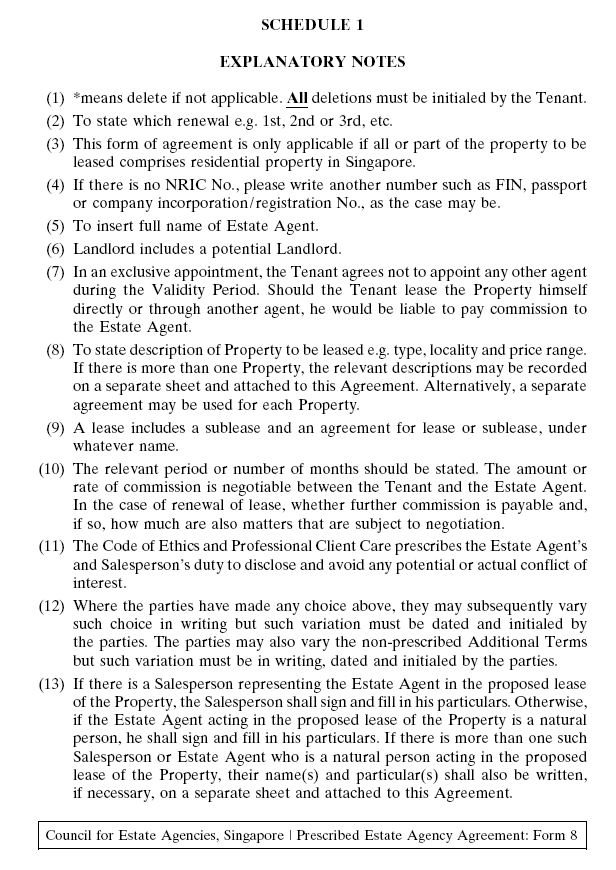
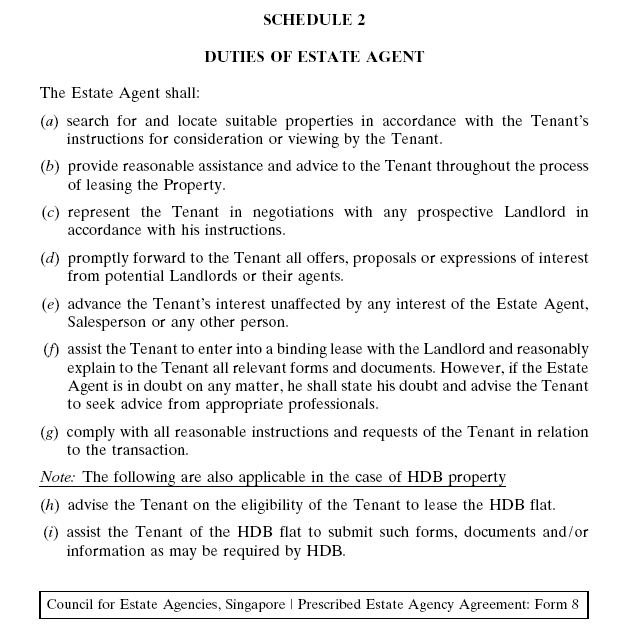
FORM 8
EXCLUSIVE ESTATE AGENCY AGREEMENT FOR
LEASE OF RESIDENTIAL PROPERTY
BY A TENANT
UNKNOWN
UNKNOWN
UNKNOWN
UNKNOWN
UNKNOWN
UNKNOWN
UNKNOWN
Made this 26th day of October 2010.
GREG SEOW FOOK HIN
President,
Council for Estate Agencies,
Singapore.
[ND 311/4-355; AG/LLRD/SL/95A/2010/1]

Archived for legal research. Authoritative version at sso.agc.gov.sg.